November 11, 2026
‘The Music Kept Returning Us to Each Other’: Jazz’s Next Great Rhythm Section Comes Into Its Own
Bassist Tyrone Allen II and drummer Kayvon Gordon are everywhere in contemporary jazz, regularly backing top bandleaders like Sullivan Fortner and Nicole Glover. What’s behind their uncommon chemistry?
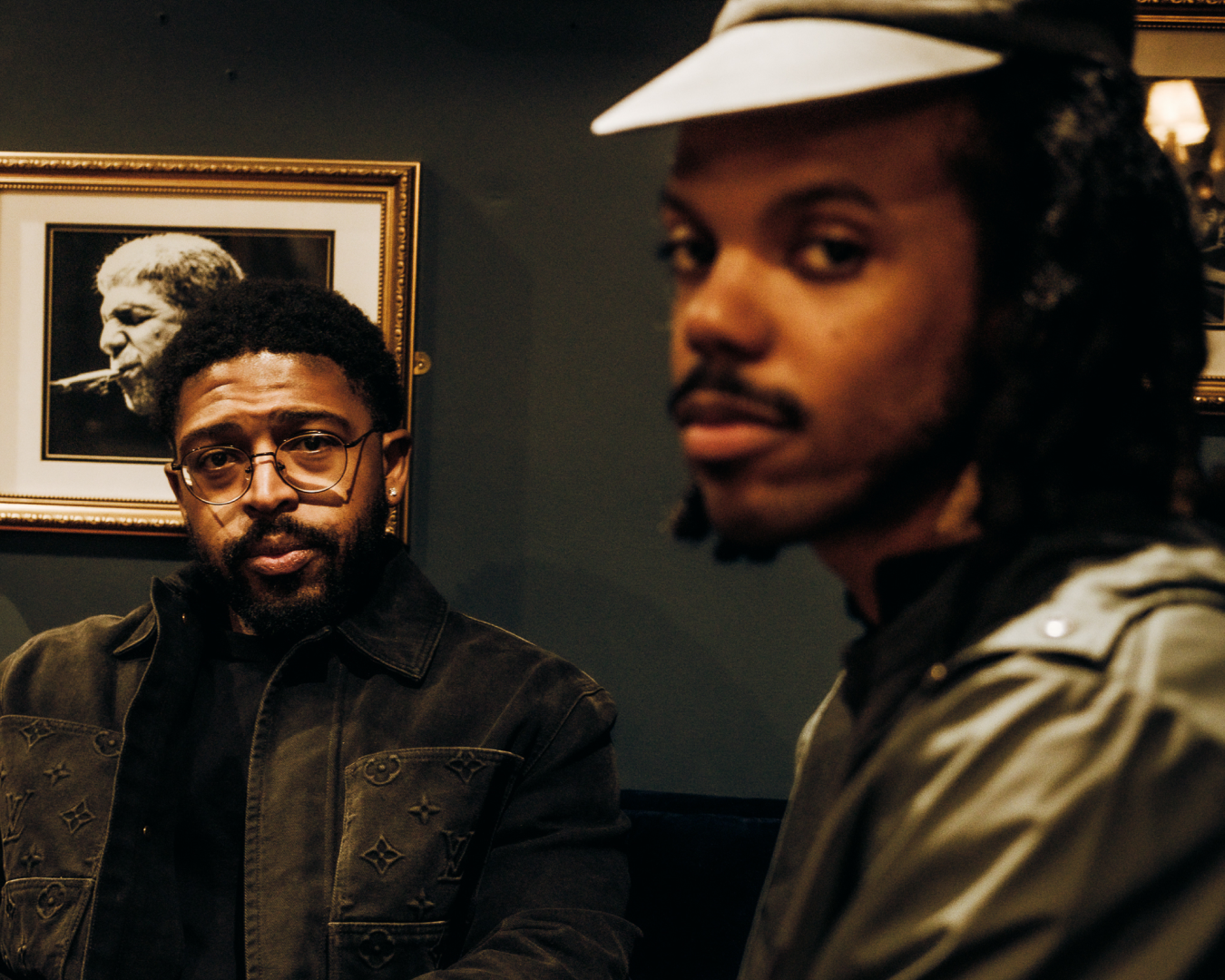
Kayvon Gordon and Tyrone Allen II. Leroy Boateng/sphere
In performance, Sullivan Fortner, the brilliant midcareer pianist, likes to move intuitively, treating his sets like stream-of-consciousness medleys. This ought to make the job of accompanying him tricky, even treacherous, but the bassist Tyrone Allen II and the drummer Kayvon Gordon, his regular rhythm section for around five years, keep pace with startling poise.
A telling moment arrives early in a July 2025 concert by the trio in Chantilly, France, a video of which is archived online. Fortner, impassive in a black baseball cap, a toothpick protruding from his mouth, has been leading the band through “Hey, Mr. Presbitainer,” an episodic original that winds across rocky terrain. At the start, Allen and Gordon join the leader in rigorous lockstep, mirroring his clanging left hand. Then they follow him into billowing free jazz, creating a dense, almost subterranean rumble underneath his full-keyboard cascade.
Fortner looks back at his bandmates to make sure they’re on board, then moves into a brief concluding taste of another tune — the John Stubblefield ballad “Baby Man” — taking it at a roomy downtempo strut. Softly yet insistently, Allen and Gordon lay into the quarter note, and Fortner settles in, tossing off a few bluesy phrases.

Again looking back over his shoulder, the pianist lets out a whooping, conspiratorial “Haha!” in the direction of the rhythm section. It’s clear that their feel, a gently elastic bed for him to ease onto, suits him very well.
The rhythm section is a sacred organism in jazz. Soloists may be featured, but connoisseurs and musicians alike know that any real hierarchy is illusory. Indeed, as Fortner told me this spring, “The relationship between the bass player and the drummer is the band.”
For Fortner, this essential nature comes down to timing. If for instance, he added, “the bass player is dragging or the drummer is rushing, then we have an argument over the root system of the group. Now we're in trouble. It doesn't matter how great the horn player, the piano player comps, there's nothing you can do with a sinking ship. It’s going down.”
As he went on to explain, he knew he had found a good bassist-drummer tandem back in 2021. Fortner and Gordon had been playing together for some time, but they were cycling through various bassists. Eventually, Allen joined them for a gig at the West Village club Mezzrow. As they were playing, Fortner recalled, “I looked up at Kayvon, and he looked at me and he pointed at him and he smiled. I said, ‘Oh, there’s my cue.’”
“There was something about the way that he looked and talked about Tyrone that made me do a double take,” he continued. “And I was like, ‘I like him; he likes him. Let’s keep this going.’ And it’s been five years.”
* * *
Today Allen and Gordon, both 31, are fixtures on the scene. Make the rounds of New York clubs and you can’t miss them in tandem. There they were last November at their frequent Lower East Side haunt Close Up in another trio led by the saxophonist Nicole Glover, amplifying both the steely swing and probing abstraction in her sound. There they were at the Village Vanguard in April, supporting Fortner with unflappable presence and unflashy precision. And there they were at Smalls in May as part of Allen’s own band, Gordon matching the bassist’s steady beat with a fluttering and undulating churn.
“Both of them have a really special way of phrasing and hearing phrasing and that allows us to be able to create these gestures together,” Glover said. “Not with a disregard for the music and for the structures at all, but within and around those structures that are there.”
The veteran pianist George Colligan, who hired the pair to play with him at Mezzrow in May, experienced their subtle yet pivotal potency during the course of a single night. (Colligan, having worked for around 25 years with one of the quintessential modern bass-drum teams, the bassist Buster Williams and the drummer Lenny White, knows great rhythm sections.) As a soloist, he said, “You should feel like you’re just on the open road, driving without any stop signs or any pedestrians. You can just go wherever you want to go. And that’s how I felt with them.”
As is often the case in jazz, the pair’s joint discography lags behind their live activity, but a handful of strong records offer snapshots of their developing chemistry. The best place to start may be Ocean Passage, an album by the saxophonist Kazemde George released earlier this year, where Allen and Gordon provide smooth propulsion and galvanizing turbulence in turn. Other notable documents include Glover’s Memories, Dreams, Reflections, from 2025; UPWARD, Allen’s debut as a leader, released this spring; and Fortner’s Leave That in There, new as of August, a playfully experimental studio document rich with layers of synths and keyboards.
On a sweltering afternoon in May, I sat down to lunch with the duo at Midwood Flats, the corner gastropub in Prospect Lefferts Gardens where their partnership had first jelled, on a weekly trio gig with George that kicked off in 2019. Arriving in New York within a month of one another in the fall of 2018, they had previously played together at a one-off private session, but at this residency, a new synergy came about.
“The way I remember it is, the first tune of the second gig is when I actually was like, ‘Oh, shit, there’s something going on here,’” Allen said.
From there, Gordon noted, their styles developed in tandem.
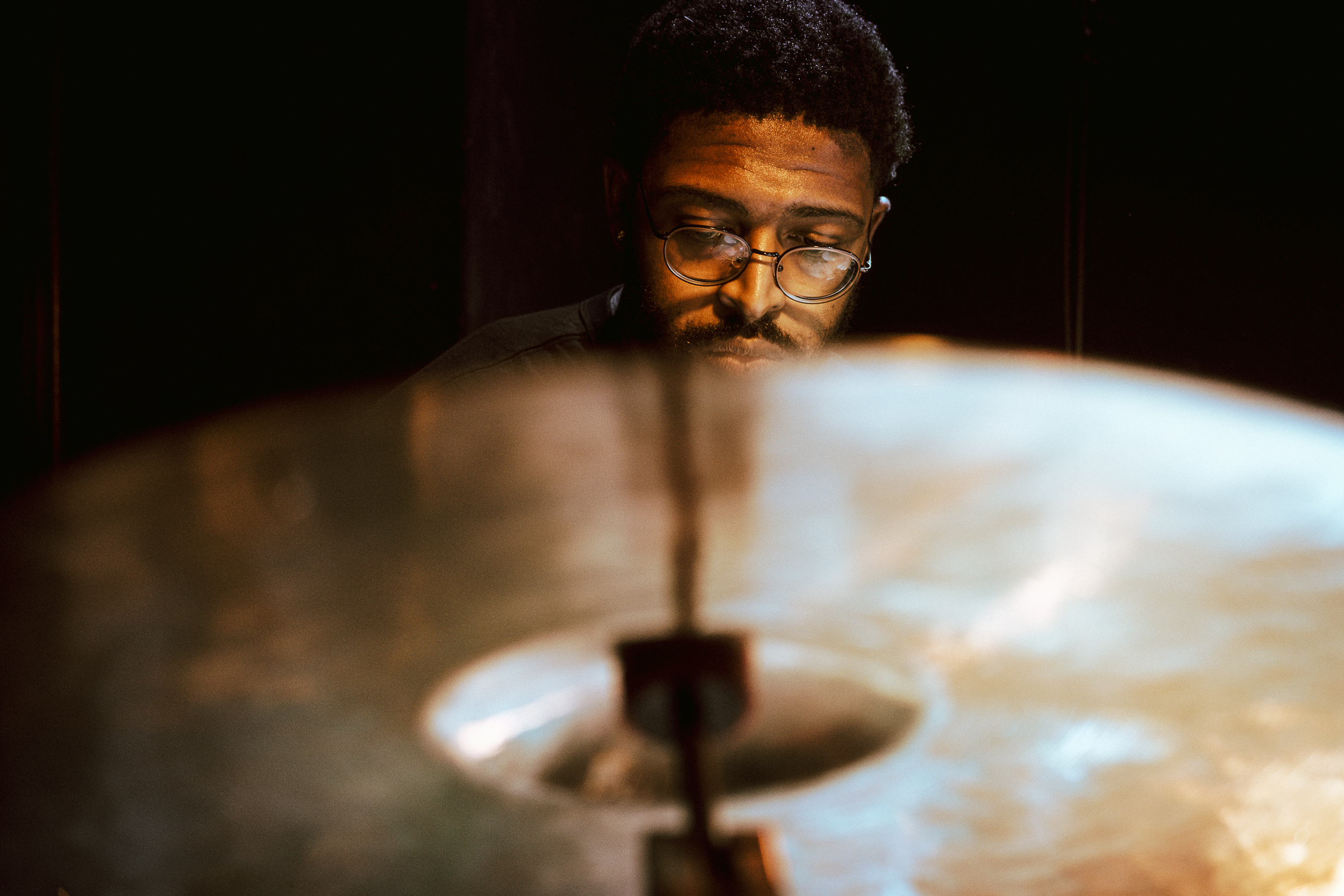
As a soloist, George Colligan wants to “feel like you’re just on the open road, driving without any stop signs or any pedestrians.” That’s how he felt playing with Allen and Gordon. “You can just go wherever you want to go,” he said.
“For me personally, just playing with Tyrone so much, and also playing with him more than anybody else since I’ve been in New York — that combined with the fact that a significant amount of my musical development has taken place since I've moved to New York — my playing has been formed in relationship to him,” the drummer said.
“A lot of things were just really easy for me with him,” Gordon continued. “It’s just like trying on a shoe that fits. Everything else, I can wear it and walk around with it, and in an hour, it’s going to be uncomfortable. This was just like, ‘Oh, this is easy.’”
Allen picked up his thread: “I remember there was a certain lightness. I just felt like the time was moving and it was like, ‘OK, I don’t have to think about how to make this time move forward and just feel right.’” He added, “I didn’t have to work as hard as normal.”
Examples of this kind of rapport between a bassist and drummer, developing across years or decades and spanning multiple bands and contexts, are relatively rare in jazz history — think of Paul Chambers and Philly Joe Jones, Jimmy Garrison and Elvin Jones, Dave Holland and Jack DeJohnette, or Charlie Haden and Paul Motian. And they’re even rarer today.
Colligan said that hiring an established pairing carries a clear advantage. “It's like, ‘Oh, I need bass and drums to have a hookup,’” Colligan said of his mindset going into a given gig. When opting for a team like Allen and Gordon, he continued, “It’s sort of prepackaged.”
* * *
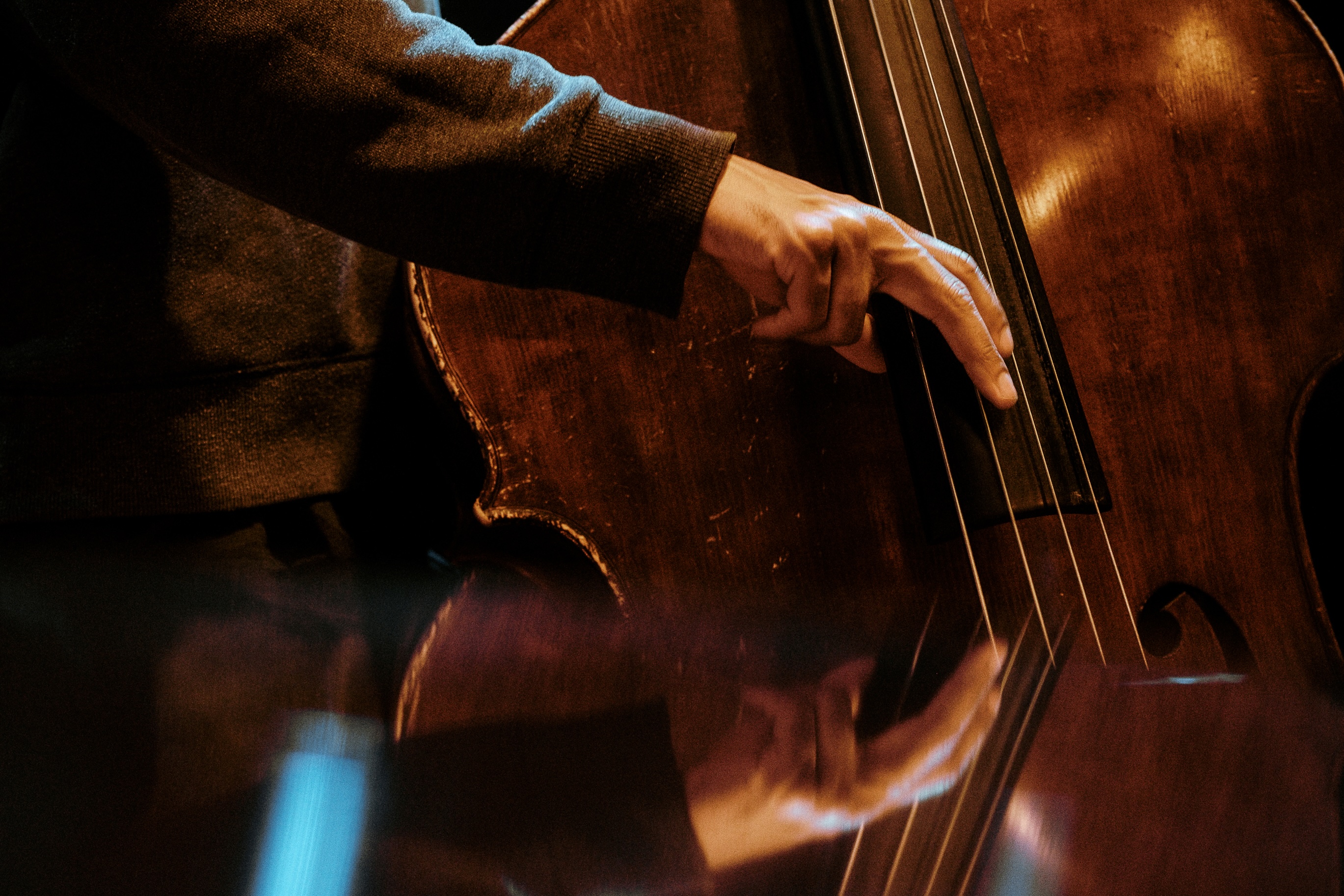
From an early age, Allen felt the special allure of the rhythm section. Growing up in Temple Hills, Maryland, just southeast of D.C., he played various instruments, including piano, saxophone, and guitar, with encouragement from his father, an amateur bassist. A decisive moment came when he was paired up with a bassist and drummer at a summer session run by a local guitar shop.
“I remember playing guitar in that context and that was cool, but looking at Tony, the bass player, and being like, ‘Man, he’s in the back, he gets to groove out,’” Allen remembered. “‘I just want to, like, groove and provide.’” After that, Allen turned his focus to the bass.
He got more serious about jazz in high school, playing in the big band, and attending the Jazz Academy of Music, a long-running camp run by the beloved local saxophonist and educator Paul Carr. Around this time, Allen had an epiphanic encounter with the magic of Ron Carter on Miles Davis’s 1965 classic My Funny Valentine: Miles Davis in Concert, a record he’d picked out of his father’s collection. Hearing Carter move from ethereal texture to an authoritative groove in the opening minutes of the title track solidified Allen’s commitment to the bass.
“The way Mr. Carter creates this tension and releases it was something that just completely blew my mind in that moment,” he said. “Gave me chills — gives me chills every time I hear it still.”
It wasn’t yet clear to him, but Allen was finding his place in an illustrious lineage of D.C. bassists stretching from elders such as Butch Warren (Blue Note’s house bassist during the first half of the ’60s), Keter Betts, and Steve Novosel.
“There’s definitely a particular sound,” Allen said. “People say there's something in the water for those D.C. bass players.”
Around the same time, in Detroit, Gordon started drumming as a young child. After his preschool teachers saw him fashioning a makeshift kit out of garbage cans at recess, he received a drum set and started taking lessons. It only dawned on him gradually that he was growing up in one of America’s most storied jazz communities.
“Man, my barbershop that I used to go to when I was a kid is right next door — like, literally shares a wall — with the Blue Bird Inn,” he said, referring to a former local epicenter of the music where, Gordon noted, Elvin Jones played in the house band.
A chance meeting with Marcus Belgrave — the trumpet great who had mentored generations of future Detroit stars, including Geri Allen, Kenny Garrett, and James Carter — provided a key entree into that tradition. One day, Gordon was in the middle-school band room, practicing sight-reading out of The Real Book when Belgrave walked in to pick up his son, Kasan, a fellow student. “I had no idea who Marcus was,” Gordon recalled. “He was just a nice old man who picked up my friend.” But the meeting turned out to be pivotal, as Belgrave brought him into a youth jazz program run by the bassist Rodney Whitaker and, by extension, the entire Detroit scene.
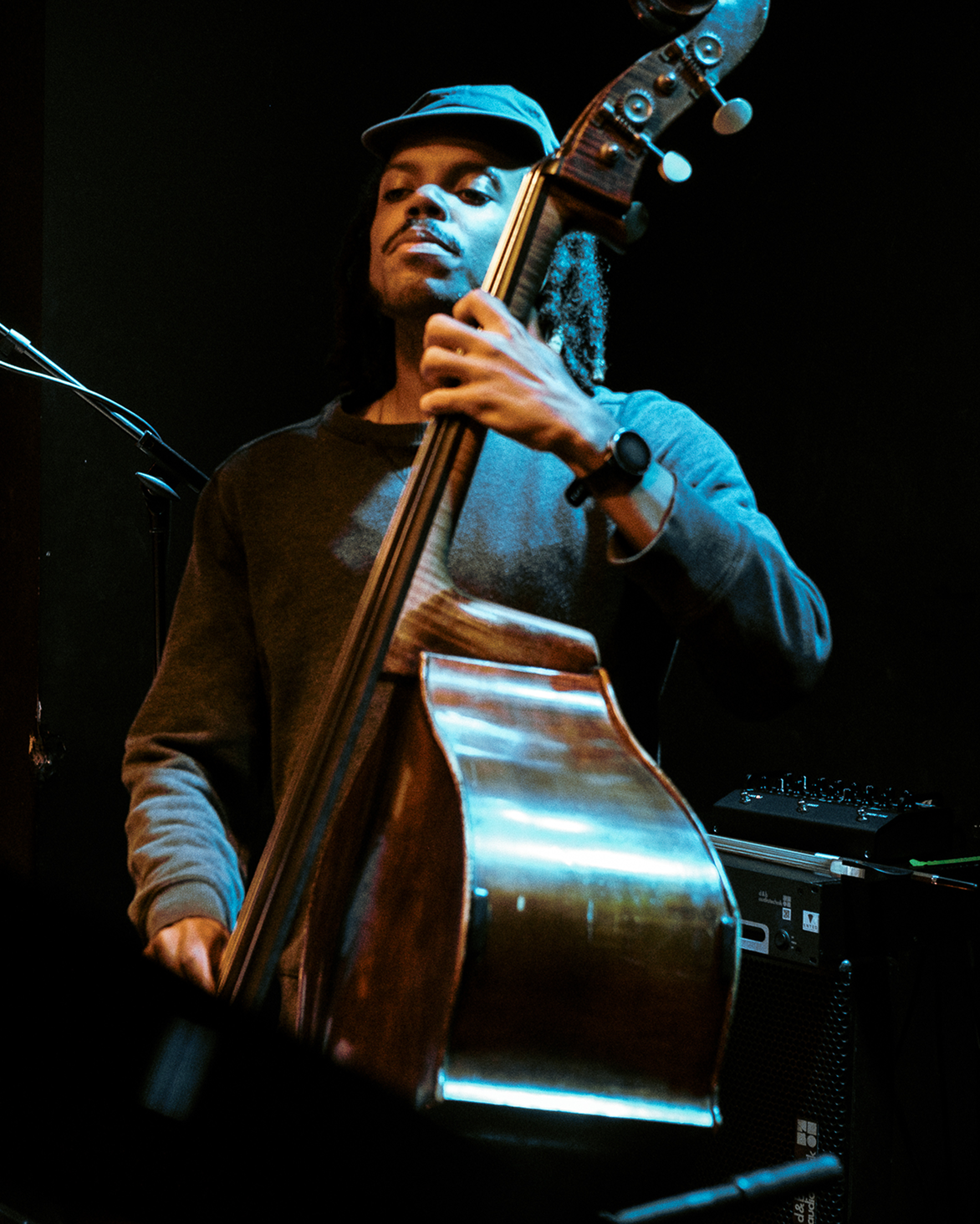
Detroit’s own lineage of bass greats is one of the country’s richest, including Carter, Paul Chambers, and Doug Watkins, as well as a younger cohort — led by Whitaker, Robert Hurst, Marion Hayden, and Ralphe Armstrong — that was still very much on the scene when Gordon was coming up.
“I got to play with some of the best bass players alive in Detroit,” Gordon said. “That kind of taught me how to function in a rhythm section. I don't know where else you can really do that — play with the best people in the world in that genre when you're 13, 14, or 15. Just from talking to other people, it doesn't really happen anywhere else.”
Allen points out that these local geographies and genealogies also figure strongly into why he and Gordon work so well together.
“We’re both American, Black,” he said, addressing Gordon. “You're from an urban area. I'm pretty much from an urban area. You're from Detroit, which has a huge history of this music; I'm from the D.C. area, which also does.
“But I do also find that there's something complementary. Even if you just think of rhythm sections, I think there's a lot of people from the East Coast that get called to play with people from Detroit.”

Allen and Gordon are clearly grateful for their ever-strengthening partnership. But even they hesitate to draw any grand conclusions about what has made them so effective and in-demand as a team.
One of Gordon’s key influences is Robert Hurst, the esteemed bass ambassador and educator, who worked with both Wynton and Branford Marsalis as they were first ascending to fame, as well as with the Blue Note supergroup Out of the Blue, Geri Allen, Charles Lloyd, and more recently, Kris Davis. Not a household name, Hurst is more an “if you know, you know” type of player, but his music is a point of connection between Allen and Gordon. “I love Bob Hurst,” Allen said.
“And I won't shut the fuck up about Bob,” Gordon cut in, sending both of them into a fit of knowing laughter.
The two also note the regional differences in their approaches, like two different accents shaping the musical conversation.
“Being from Maryland, I have a little country thing going on that Detroit does not have,” Allen noted. “Y’all got the twitchy, like—”
“Techno, yeah,” Gordon added, finishing his sentence, and citing the electronic music that’s as inseparable from his hometown legacy as jazz.
You can hear these currents coming to the fore on Fortner’s Leave That in There, where Gordon drops fractured funk rhythms on tracks like “12 Gallons” and Allen provides a twangy center of gravity on the surrealistic swinger “Swirl.”
Fortner — who studied with Belgrave at Oberlin, and later worked with the trumpeter’s wife, the vocalist Joan Belgrave — noted his own ties to the same tradition that nurtured Gordon.
“All three of us I think have come from a rich background as far as where we're from,” he says. “I mean, Kayvon's from Detroit. We shared some of the same teachers, Marcus Belgrave and people like Joan Belgrave and Rodney Whitaker and Geri Allen and all these people that have touched both of us, both directly and indirectly through their music and through their pedagogy. And then the D.C.-Baltimore area has a very, very rich history of bass players, many of whom I played and shared bandstands with.”
* * *

Another common influence is the Black church. Gordon drummed at his family’s Pentecostal church and then picked up keyboard, which he played for hire at other houses of worship, including Baptist and Church of God in Christ congregations. “A lot of the stuff we were doing wasn't as harmonically sophisticated as the jazz I was playing, but still I think that helped my ear a lot,” he said.
Likewise, some of Allen’s earliest experiences on bass came in Cornerstone Baptist Church in Temple Hills where, he says, he learned to “serve a greater goal musically.” He adds that, in that setting, “You know when you're getting the correct reaction because it is very visceral. People really connect with the spirit and whatever spirituality they're feeling when the music is right.”
This awareness has come in handy in their work with Fortner, whose musical beginnings also trace back to the Baptist church in New Orleans where his mother was the choir director. As he tells it, these experiences, and his continued commitment to playing in church whenever possible, left him with an entire lexicon of performance that’s second nature to Allen and Gordon.
“Whenever I play, I make hand signals and I yell. I scream. I do all kinds of loud stuff,” he said. “That’s part of our upbringing and that’s something that resonates with them. They know exactly what I'm going to do when I just make a squeal or a squirm or something. They know exactly where it’s going.”
(Fortner also noted Allen and Gordon’s facility with the Black pop canon: “We don’t have a problem jumping from playing some Cedar Walton stuff and then jumping and doing Herbie Nichols and then playing a Prince song or Stevie Wonder or Michael Jackson song in our set.”)
Not just responsive, Allen and Gordon also know when to take the reins, a particular asset in a democratic setting like Nicole Glover’s trio. Allen, Glover said, “makes choices that always make everything work.”
“He’s almost like a producer mind, a producer ear, where it’s like he’s able to hear the whole,” she added. “I think he has a real gift for understanding what he can do to essentially shape that and make everything come together.”
Gordon, Kazemde George said, likewise keeps him alert. “He’s a little tricky sometimes, man,” the saxophonist said of the drummer. “He’ll play ideas that are sort of outside of what I’m expecting and if I’m not very solid in what I’m doing, I’ll get totally lost,” George said. “He creates such a texture when he’s playing. On my album, I feel like he represents the ocean. It’s kind of like waves, and there’s always activity and little flurries going on.”
* * *
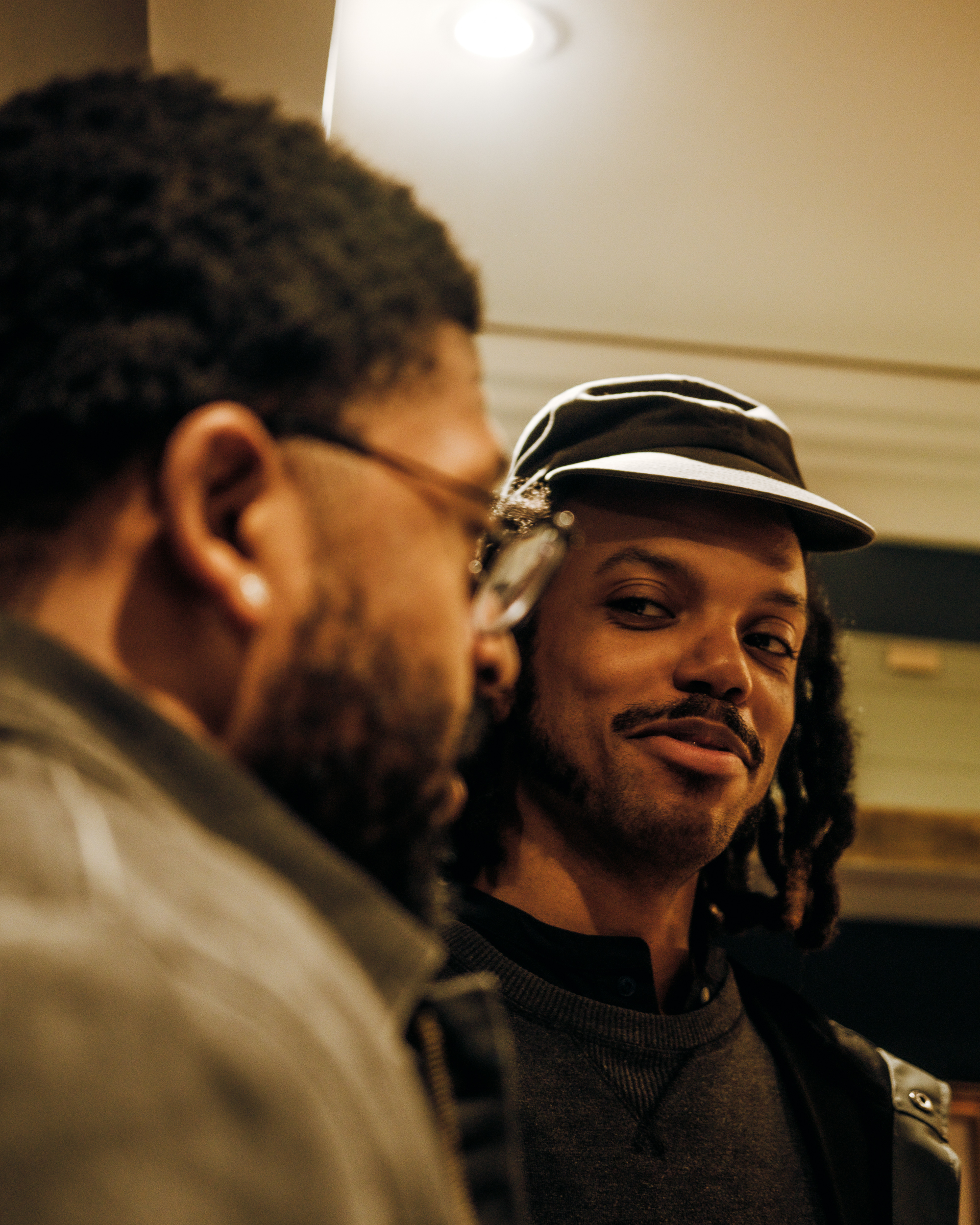
Allen and Gordon are clearly grateful for their ever-strengthening partnership. At the same time, they hesitate to draw any grand conclusions about what has made them so effective and in-demand as a team.
“I don’t know what it is about me and about how I play and about him and how he plays,” Gordon said. “It just kind of feels like maybe the music kept returning us to each other.”
Offstage, they have an easy, good-humored camaraderie, too, but they’re open about the fact that, like siblings, they don’t always get along. Their constant proximity, with five Fortner tours last year alone amid all their other collaborations, inevitably results in interpersonal snags. (“We would joke about that beforehand, looking at the calendars, like, ‘Alright, I’m only going to see this motherfucker,’” Gordon said mock-ruefully.)
On a recent tour with Fortner, for example, after the leader had changed an arrangement on the fly, a pre-gig dispute broke out between them.
“So we finish a sound check and we’re sitting in the basement arguing,” Gordon recalled. “Sullivan gets up and he just kind of walks away and he starts picking at the food tray, and me and T are just kind of like bickering about it, and then Sullivan has this big smile on his face and I’m like, ‘What fuck are you smiling at?’ And he’s just like, ‘Man, I got a glimpse of y’all in like 50 years.’”
Kazemde George, Ocean Passage (2026)
Sullivan Fortner, Leave That in There (2026)
Tyrone Allen II, UPWARD (2026)
Nicole Glover, Memories, Dreams, Reflections (2025)
Photographs by Leroy Boateng
RELATED ARTICLES