November 9, 2026
Inner Endlessness Theory
The jazz tradition has often been described as a line of descent. But what if that line has no beginning or end, each song an expression of eternity? Ben Ratliff explores the paradox of a music perpetually caught between the now and the infinite.

Sophie Douala/sphere
Occasionally, and more and more, I have been wondering whether any “song,” or any bounded piece of music that comes to us with a title and possibly a copyright, is complete. It might be just a teaser. It might be better understood as a reasonable representation of something much greater and longer. What we can’t hear is the real song, which might go on, let’s say, forever, or eternally.
More: the “song” might already be there before it is “written,” and if we say a musician has written it, we might also say that they have found it. The realest version of that music might have started before they were born and will continue after they die. I don’t mean that everything’s been done by someone else before; I mean that, perhaps, what musicians do is wander for a while into something that has no particular author, and then leave it. Also, what the musician plays now is connected to the possibilities of what they’ll be playing later; that yet-to-come music is something that you probably can’t “hear,” or prove, in the sense of evidence, but is nonetheless somehow already with us.
This obvious or unreasonable idea might seem more “true” with certain kinds of sacred or ritual music, from very old cultures, in which length and repetition and tradition have practical purposes. Or with the newest, most efficiently produced dance music or street music, like the best dembow song I’ve heard from a New York car window this summer: “Desacato,” by Chapo 240, Donaty, and Herido no muerto. But I’d suggest that all music represents some form of ritual, and this notion of “inner endlessness” might obtain even with Mozart, or, say, the Beatles song “And I Love Her.” Certainly it makes sense for music involving improvisation, or which isn’t largely based on development. Certainly it makes sense for the jazz tradition—particularly because of jazz’s relationship to the authorless and seemingly eternal nature of the blues—or any music that makes you think, even for a second, “how long will this last?,” and “where is this going?” Whatever jazz is, it at least contains some unscripted possibilities for what has not yet happened.
The big problem with the inner-endlessness theory is the usual one about history. Jazz, like everything else, has a line of tradition, which is sometimes converted into the idea of “history,” and history is usually understood as happening within grids of time—things start and then end—but the idea of eternity, in which things cannot be said to start or end, lives at cross-purposes with the idea of history. Also, jazz is often thought to be concerned with the “now” as an area of possibility: a point of arrival, a new beginning, a revision, inspired by the musical and social relationships in a room, a studio, a club, a city, of now, and now, and now. But at the same time, jazz musicians are quoting and referencing and allowing some very old energies to enter their playing, and they’re also surging forward in a state of anticipation which isn’t really about “now” at all. These paradoxes create useful tensions.
Whatever jazz is, it at least contains some unscripted possibilities for what has not yet happened.
One of Betty Carter’s better records, not recorded live in a club although it sounds as if it could have been, was called It’s Not About the Melody. A certain kind of listener might be confused by that title, because Betty Carter was among other things a melodic improviser. But you get the idea: a jazz performance doesn’t reduce to its melody, and anyway, “the melody” implies “a melody,” and there isn’t only one. Music from this tradition, if it’s any good, holds together somehow, as in the relaxed band-wide cohesion you can hear through “Dip Bag,” a highly improvised nine-minute track on that Betty Carter record. Jazz has a tradition of playfully masking its narrative organization and its disunity, masking even its purpose, making its options explicit, and not wanting to be understood too quickly. It doesn’t reduce to any single use value or unitary idea. Many people who like to listen to this music, or think or write about it, will keep bumping up against this problem, but of course the problem is its gift.
For some, the problem with jazz is that it rarely reduces to a shareable four-minute song that emphasizes the beginning and the end. An individual piece of jazz might have headlines, as it were, but beyond that, jazz often doesn’t extend a premise or a “point,” and therefore it may be suspect, possibly a con. For others, this isn’t a problem, because what jazz does do is expand until it becomes a giant totality whose borders are hard to perceive. Jazz isn’t really a song-by-song proposition; the value of a musician is determined by the entirety of their playing life, including what hasn’t happened yet.
One way to immerse yourself in this kind of musical value is to go hear it again and again in the same place, so you can experience growth and changes within the same conditions. That’s one reason why residencies at clubs and performance spaces have been, and will continue to be, crucial to the jazz tradition. A band gets better and freer within a space; the audience begins to cohere there and builds a culture around the music, such that the music is the culture and vice versa. Jazz might obscure its own narrative lines, but there is one narrative line that doesn’t start arguments: Tuesday, Wednesday, Thursday, Friday, Saturday, Sunday …
The first jazz person who talked to me about eternity vis-a-vis music was Wayne Shorter, and what he said got under my skin. (I am wary of laying the blame on him. The idea I’ve sketched out here might have been a conflation of two different conversations I had with him, one about “the real adventure of eternity”—”real” meaning, for him, literal and everyday—and another in which he declared “the word ‘finished’ is artificial to me.”) The alto saxophonist Immanuel Wilkins, who has spoken about similarly memorable conversations with Wayne Shorter, made a three-album set in 2026 called Live at the Village Vanguard. There is jazz-historical tradition at work there: as with John Coltrane, Bill Evans, Dexter Gordon, et cetera, a record label recorded his quartet at that club through successive nights. Its “songs” have sections, and are the result of strategies devised by the quartet, but they’re also long and discursive, and if you’re listening without information you don’t know when or how they’ll end. The greatest parts of this very long trove of music arrive when the band has gotten past the exposition of the melody (as per Betty Carter), or whatever the song’s “about.” Of course each piece of music within it does end, and so this situation is not literally eternity. But we’re talking about representations of eternity, and the best of these representations, on volume 1, is called “Eternal.”
The first jazz person who talked to me about eternity vis-a-vis music was Wayne Shorter, and what he said got under my skin . . . The idea I’ve sketched out here might have been a conflation of two different conversations I had with him, one about “the real adventure of eternity”—”real” meaning, for him, literal and everyday—and another in which he declared “the word ‘finished’ is artificial to me.”
Here, the band plays a tune for four minutes; as a display of jazz practice it’s totally contemporary, coordinated and dynamic and fragmented and fluid, shifting beats around, with a dizzying solo by Wilkins. Time streams by. Then, before the five-minute mark, everything changes. What follows is a slow, tolling melodic line, 18 notes across eight bars, with the drums reduced to soft and even brushing. The sequence takes about 20 seconds to be completed, the end leads back to the beginning, and the sequence repeats, with no major changes in volume or anything else, for nearly 15 minutes. The line becomes a circle. So, contra Betty Carter, what you’re hearing is just the melody. Perhaps you feel enclosed, or that you can’t get away from it, or you’re experiencing the downside of the idea of “time stopping.” This is the new “now,” and it’s short and repeating. But after a few minutes, you become disoriented from the old conceptions of time, reprogrammed to be thinking about past, present, and future as one continuity. At least that’s what I’ve experienced with it.
This example is a little on the nose, title and all, but Wilkins risks obviousness to demonstrate something profound. One of Wilkins’s heroes is Sonny Rollins, who died earlier this year at the age of 95. Rollins was recorded by RCA Victor for four nights in a row at the Village Gate in 1962, during a period when he was leery of recording in studios. Those recordings were released more fully, though not completely, and not within the restrictions of U.S. law, as Sonny Rollins Quartet With Don Cherry: Complete Live at the Village Gate 1962, on the Spanish label Solar. You can’t stream them—you have to order them as a set of CDs. Or you have to look them up on Youtube and deal with ads and other annoyances. They’re worth any trouble it takes. I’ve written about them before, and I will probably keep writing about them until I can’t write anymore. What the quartet does there represents a version of eternity, I think, but in a completely different way. There are a few “tunes” involved—Rollins’s “Oleo,” Bud Powell’s “Tempus Fugit,” the Jerome Kern-Johnny Mercer standard “Dearly Beloved,” rendered at high speed, as if the quartet was sprinting away from a tune—but the group's performance practice generally encouraged individual free expression, with some ground rules about order and combinations of players.
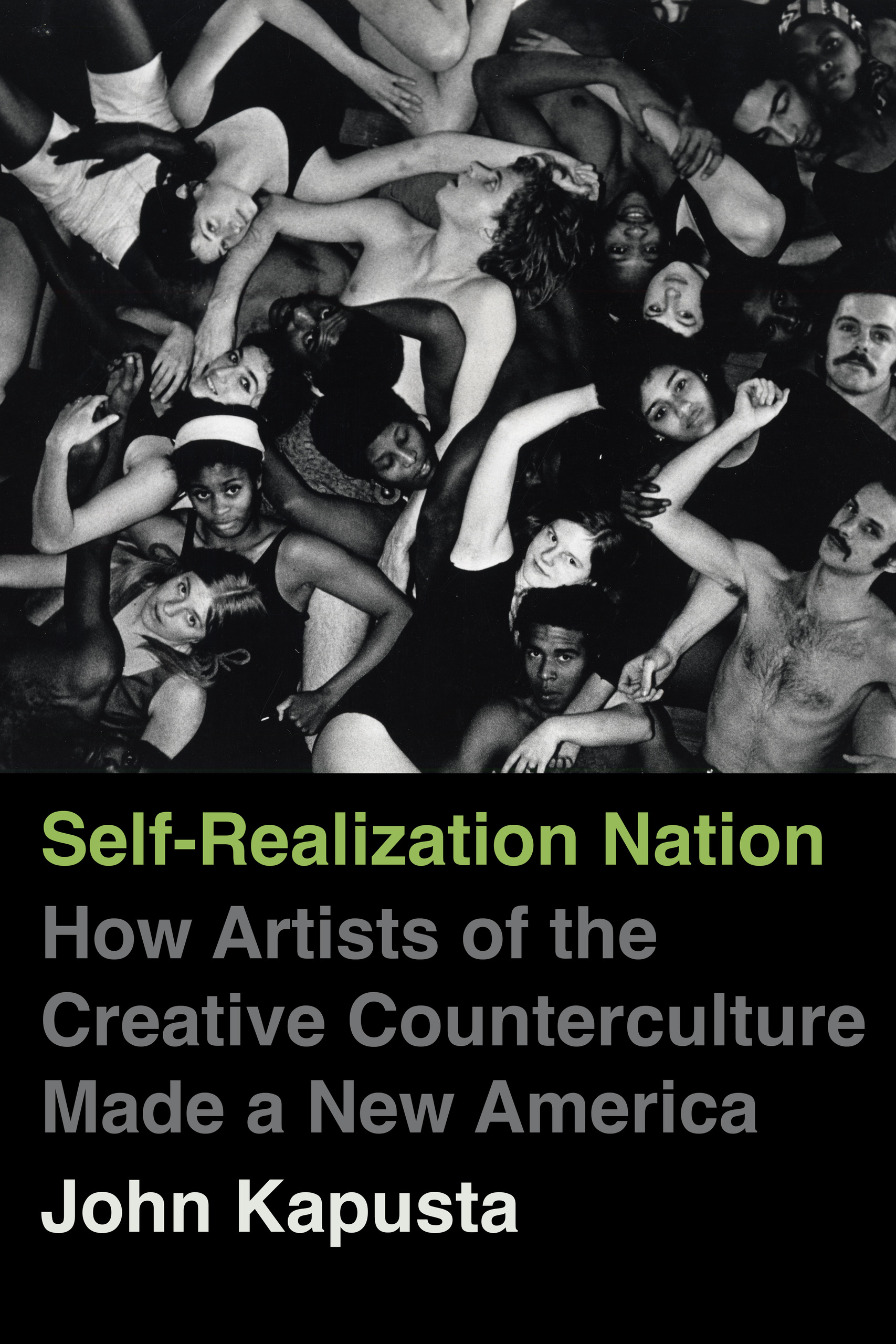
The musicologist John Kapusta’s recent book, Self-Realization Nation: How Artists of the Creative Counterculture Made a New America, discusses these performances as a natural outgrowth of Rollins’s interest in yoga and “letting go” of outside expectations and standards. He was, in a sense, stepping out of time, stepping out of history, in the interest of self-realization. As Kapusta describes it, quoting and paraphrasing from Rollins’s notebooks, Rollins’s 1962 idea of performance practice would appeal to anyone interested in the minutes before the start of an orchestral concert, when the musicians tune themselves: one or two or more of the musicians should begin to play and listen for their individual note. (“We begin to hear our note,” Rollins wrote: you sense the depth of each of those words he underlined.) When the members of the quartet began to hear what was going on around them, and felt ready to join what they heard, they would do that.
So perhaps there was no real division between getting ready for the thing and the thing itself. Anyway, the “thing” wasn’t so important; the selves of the musicians, separately and together, were important. When the musicians joined the stream, the stream was already active, and they didn’t know where the stream would go. Rollins was interested in figuring out ways to “release” the music, rather than play it; this notion implies that the music was already there. (And it might have engendered a strange relationship with an audience, who generally feel that they deserve a gift, something new and made just for them, rather than something that’s “already there” and made mostly for the musicians.) You might call these performances “free jazz,” but that would be a pretty sloppy description. This music doesn’t sound idiomatic, as a lot of free jazz does. Rather, these performances remain confusing, and also radiant. Some of these individual tracks are very long, but duration doesn’t seem to be the point either.
Why record someone for a whole week? At one point, many years ago, an extensive live recording might have been a record-business novelty. But the night-after-night-ness of it could also be an intimation of eternity. Kapusta’s book indirectly implies that in the early 1960s, the idea of an “endless” song, an unbroken line, or at least a song without clear and predetermined beginnings and ends, could work as a salve for what was known as the Age of Anxiety; it might have implied transformation, rather than simply the end of the line, the end of the world. Anyway, the experience of a jazz performance, not only by us in our current Age of Anxiety but by anyone at any time, isn’t a discrete, one-time transaction with a fixed artistic product, like a museum vitrine, so much as it is a step into a stream. Jazz musicians, knowing this, as the units of the song and the album slowly melt and transform, continue to do interesting things with live recording. Cécile McLorin Salvant’s album Dreams and Daggers mixed live recordings at the Vanguard, where the listener feels the presence of the audience, with very studio-based recordings. (The stream and the vitrine, together in one place.) The young trumpeter Dave Adewumi recently chose to record a live album as his debut: The Flame Beneath the Silence, made out of recordings from a multi-night run at Ornithology in Brooklyn. The saxophonist Kevin Sun just finished a series of five heavily post-produced live records, all called lofi at lowlands, culled from his weekly residency at the Brooklyn club of that name. Jeff Parker’s two recent albums with his ETA IVtet group, The Way Out of Easy and Happy Today, recorded live, are perhaps more full of “room tone” than any records I’ve ever heard. “Room tone” can historicize, signifying that something happened in such a room at such a time. But strangely enough it also eternalizes, since its room tone becomes your room tone, no matter where you are, as long as you keep listening to it. I wasn’t surprised to learn that Happy Today was recorded in the round, with the band enclosed in a circle: round and round, eternity.
Betty Carter, It’s Not About the Melody (1992)
Immanuel Wilkins Quartet, Live at the Village Vanguard (2026)
Sonny Rollins, Sonny Rollins Quartet With Don Cherry: Complete Live at the Village Gate 1962 (2015)
John Kapusta, Self-Realization Nation: How Artists of the Creative Counterculture Made a New America (2026)
Cécile McLorin Salvant, Dreams and Daggers (2017)
Wayne Shorter
Dave Adewumi, The Flame Beneath the Silence (2026)
Jeff Parker, The Way Out of Easy (2024) and Happy Today (2026)
RELATED ARTICLES