ABOUT JGI
NEW ORLEANS
JGI New Orleans is an innovative interdisciplinary residency, fellowship, and creative hub based in New Orleans. JGI New Orleans offers opportunities for gatherings based on experimentation and creativity while drawing inspiration from the city of New Orleans and its connections with the African diaspora, the Global South, and the Gulf South region.
The JGI New Orleans Jazz Cohort is a convening of musicians who will receive support for the curation of original work, and travel and performance opportunities in New Orleans and New York. There will be a different cohort for every year of the JGI New Orleans project. To learn more about our 2026 JGI New Orleans Jazz Cohort, please see below.
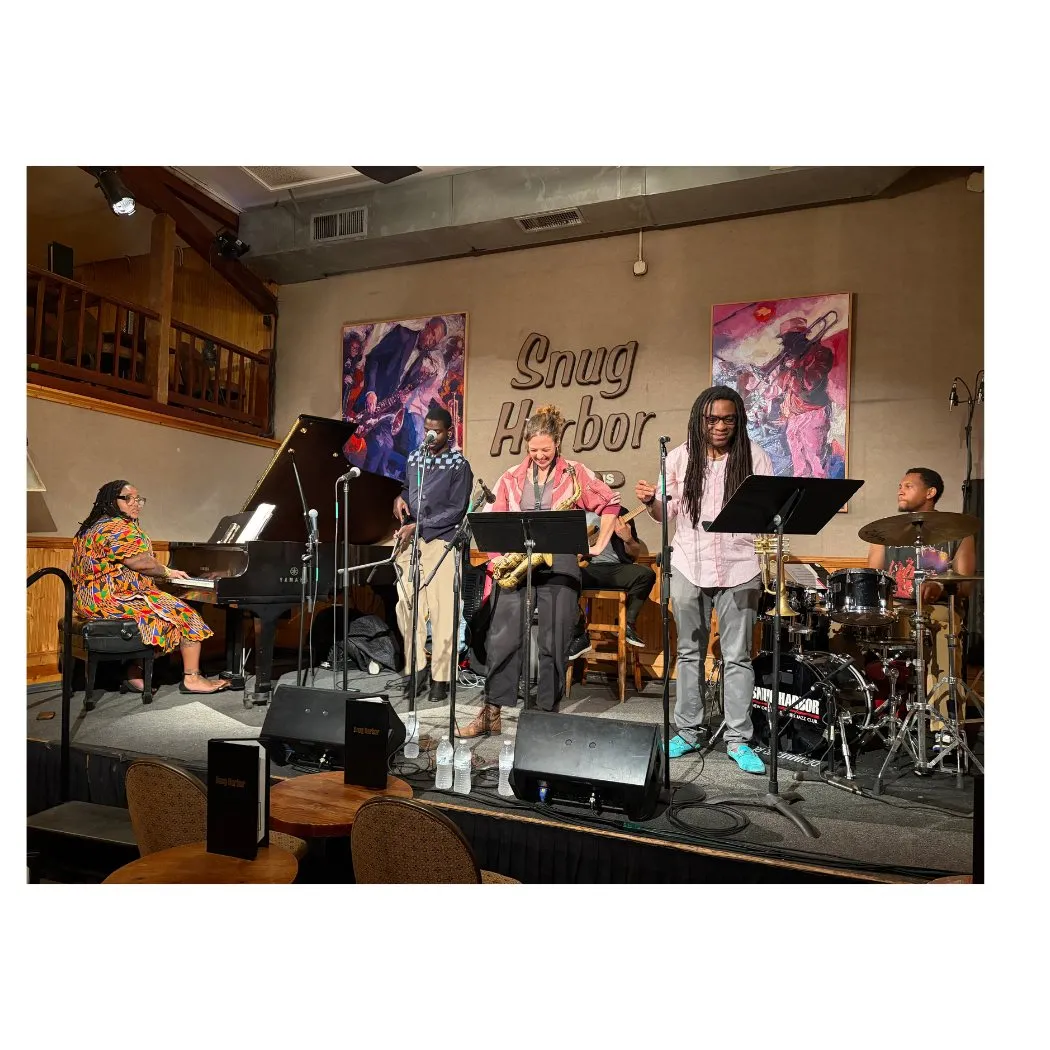
Stephen Lands
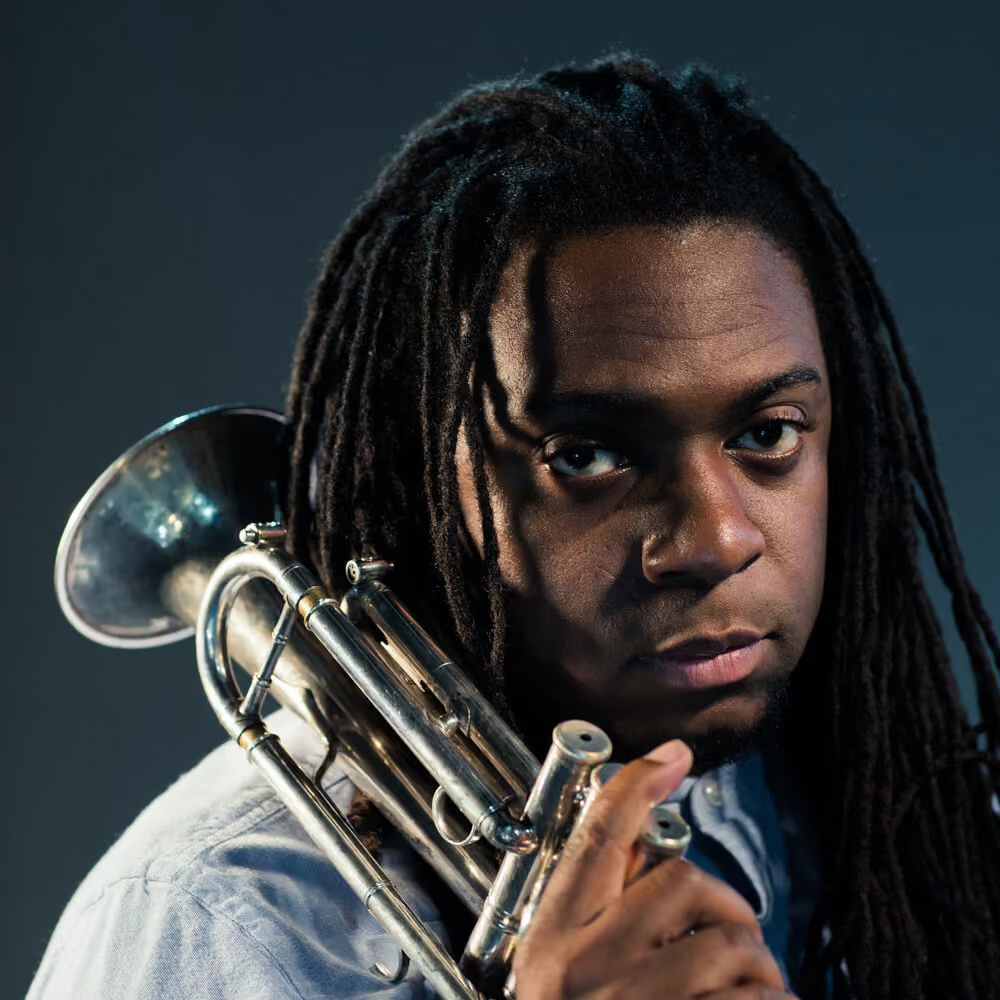
Stephen Lands is part of the 2026 JGI New Orleans Jazz Cohort. Hs is Baton Rouge-bred, New Orleans-based trumpeter and composer who’s had the distinct pleasure of performing with some of world’s greatest musicians, including touring and recording with the world-renowned Preservation Hall Jazz Band, Elvis Costello, Jazz at Lincoln Center alumni Herlin Riley, Wess “Warmdaddy” Anderson, Victor Goines and Ronald Westray, Shannon “King of Tremé” Powell, Jason Marsalis, Evan Christopher, Grammy nominees Cyrille Aimée and Jamison Ross, Quiana Lynell, and most recently, PJ Morton.
As a composer, he’s scored the music for a handful of projects with filmmaker Marion Hill, including 2021’s Sundance Film Festival Award-winning feature, “Ma Belle, My Beauty.”
Hot on the heels of two sold-out debut performances of his current signature project, “Rearranging the Planets” for the Spring 2022 season at the New Orleans Museum of Art (NOMA), Lands has since been presenting new movements from this body of original compositions, such as the project’s little sister, “KosmiKrewe” aka “Cosmic Roux.”
Learn More: https://www.thestevelands.space/
Tonya Boyd-Cannon
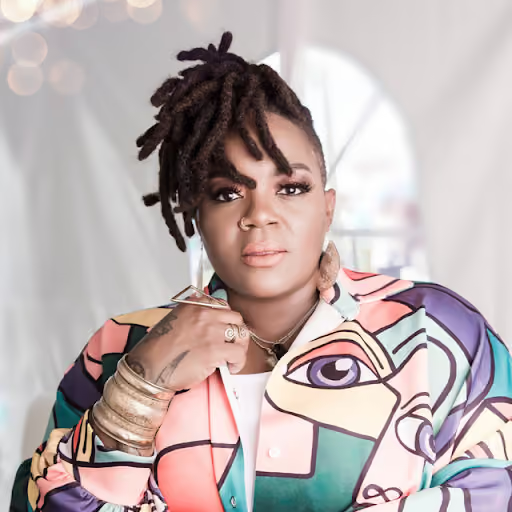
Tonya Boyd-Cannon is part of the 2026 JGI New Orleans Jazz Cohort. She is a woman who does not simply perform music - she channels it, shapes it, teaches it, and uses it as a conduit for restoration. A classically trained musician and nationally recognized educator, Tonya brings a depth and intentionality to her craft that transcends genre. Her signature sound places vibe, storytelling, and soul-centered expression at the heart of every performance. Whether she’s moving listeners through heart-stretching ballads or igniting crowds with jazz, funk, rock, gospel, or blues, Tonya refuses limitations - her music ebbs, flows, and expands the moment it touches the air.
As a vocal phenomenon, she has built an illustrious career marked by multiple singles, EPs, full-length albums, and dynamic collaborations. Each release showcases her vocal mastery and her commitment to creating music that is as healing as it is sonically rich.
Her work has consistently garnered praise from both media and critics, solidifying her as a beloved creative force.
Her performances span global stages from the New Orleans Jazz & Heritage Festival to Colombia’s Mompox Jazz Festival yet her impact reaches far beyond the venue. Tonya leaves an imprint on the spirit. Her voice lingers. Her message resonates. Her presence shifts the room.
Victor Campbell
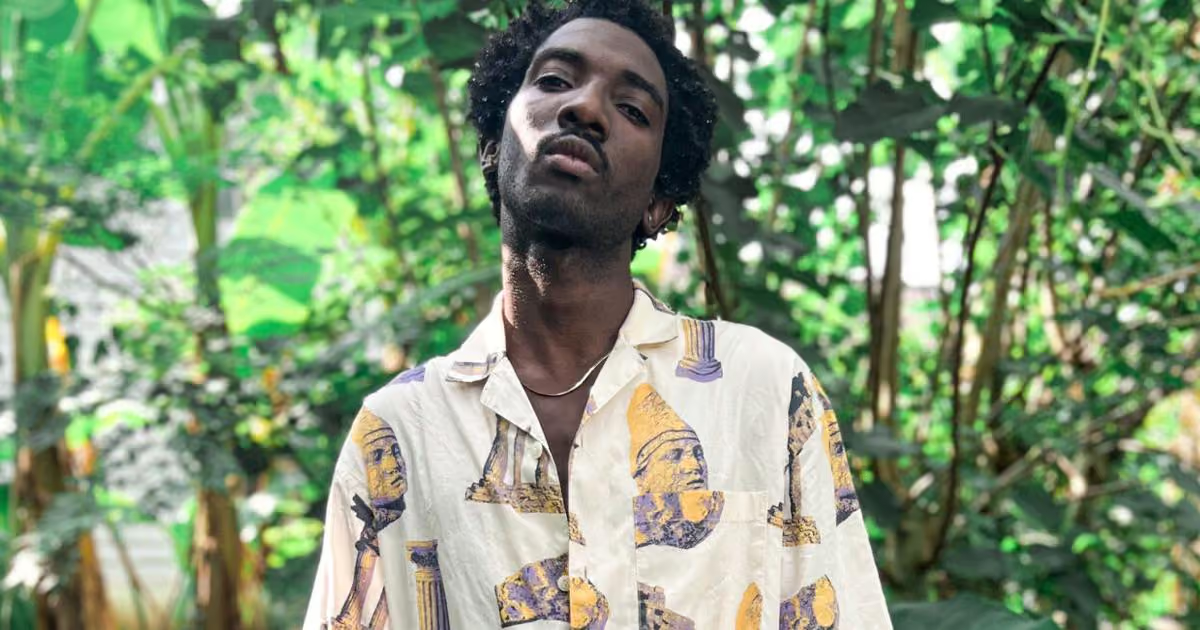
Victor Campbell is a 2026 JGI New Orleans Jazz Cohort member and a young jazz piano player hailing from Camagüey, Cuba. His compelling style combines virtuosity, whimsy, charisma and technical prowess.Notably, it is just plain fun to watch Victor perform. He started playing piano at age 5 and went on to train at Cuba’s National School of the Arts. He has since played all over the United States and internationally. Victor first visited New Orleans in 2012 as a teenager, part of an exchange program with the Louis Armstrong Summer Jazz Camp. That visit changed his life and in 2019 Victor decided to move to New Orleans. He has been feverishly studying all styles of New Orleans music ever since, and incorporating it into his own musical language. He can effortlessly transition from a blues solo, to a Cuban timba montuno, and then right into a classical piano selection. In a 2019 interview, the great Chucho Valdés predicted that “Victor will revolutionize Cuban jazz piano.”
Aurora Nealand
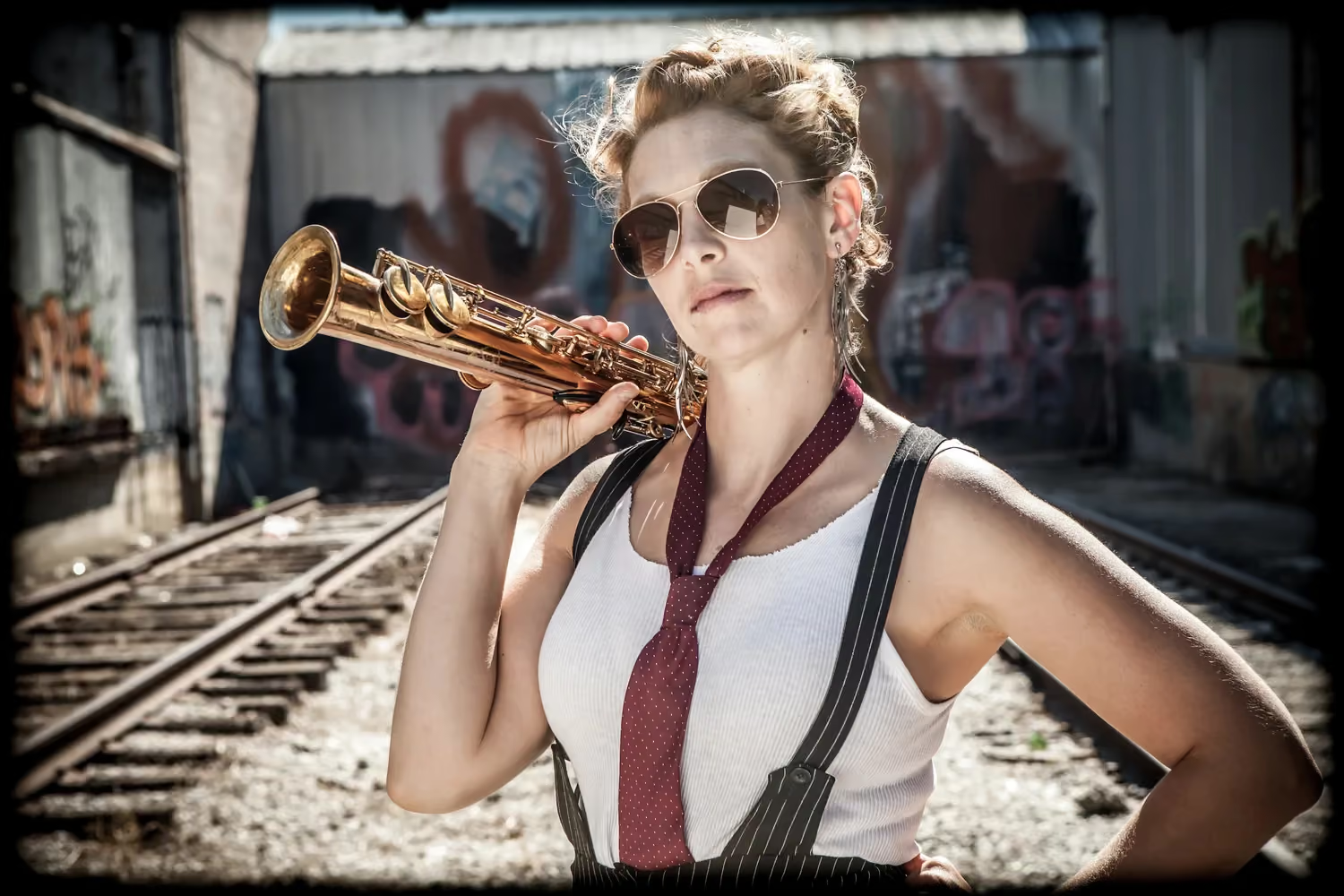
Aurora Nealand strives to live at the intersection of Lunatic and Librarian. She is part of the 2026 JGI New Orleans Jazz Cohort and a sound artist and multi-instrumentalist (saxophones, accordion, voice) based in New Orleans, LA . She is deeply interested in the sonification of everyday objects and knowledge-generation through the stories and history that Sound (with a capital S) contains. Nealand is the leader of The Royal Roses, the non-traditional Traditional Jazz band, which draws its approach to collective improvisation’s lineage, spanning from the New Orleans Early Jazz traditions, to the AACM, and collage-sound art and musique concrete. Nealand's other musical projects include The Monocle Ensemble - her original music project and installation ensemble, redrawblak Trio, Instigation Orchestra, John Hollenbecks GEORGE, and the Danger Dangers. In 2019/2020 she debuted KindHumanKind- a 90 minute fully staged theatrical show at the Contemporary Arts Center New Orleans, based on her original music. She is co-creator of the City Songs Project (created originally for Knoxvilles Big Ears Festival), regularly works as a musical facilitator with Found Sound Nation -an organization which facilitates international musical collaboration, and she has been involved with the Walden School for Young Composers (as a teacher/performer) for 20 years.
Max Moran
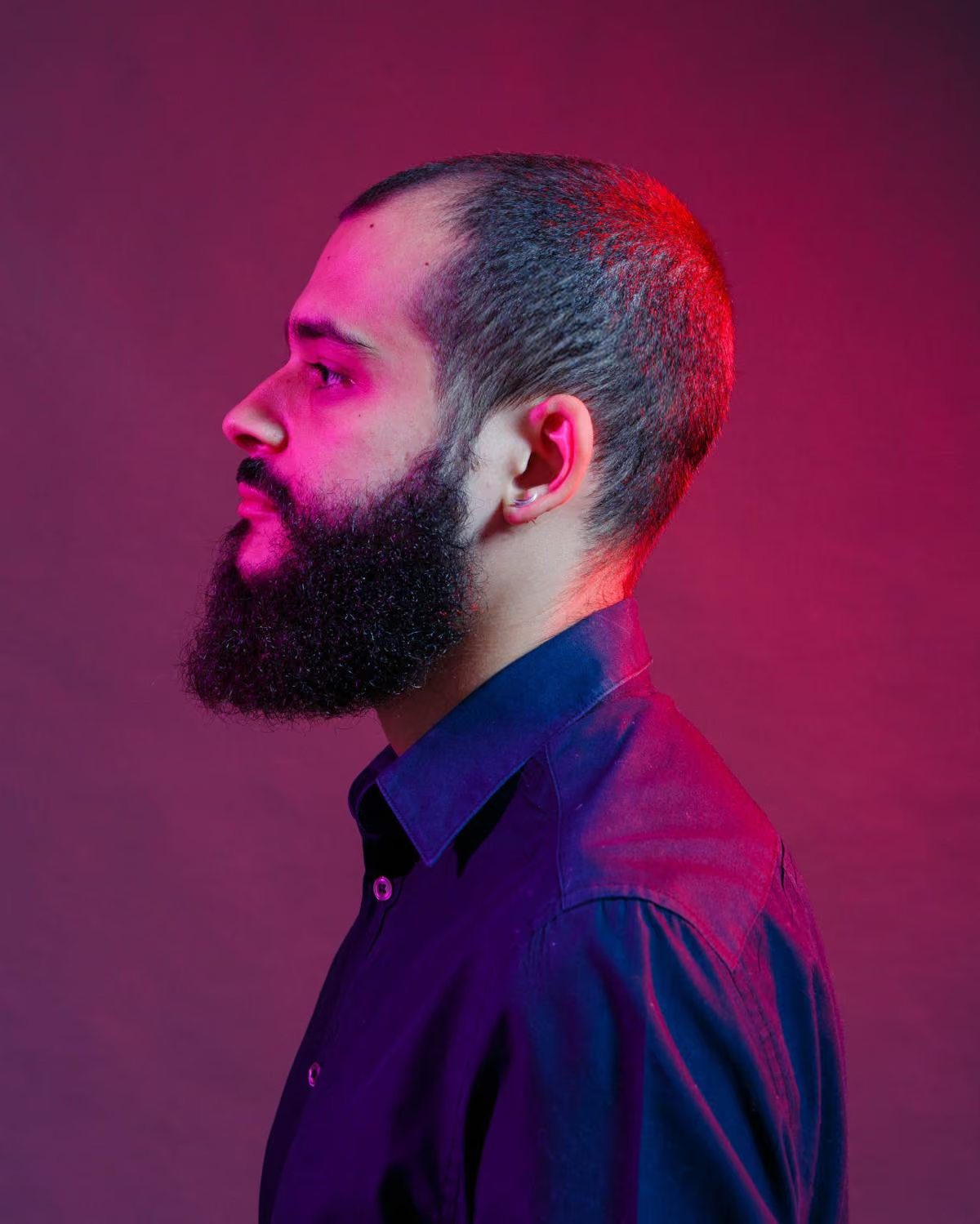
Max Moran is a 2026 JGI New Orleans Jazz Cohort member and a Louisiana born musician and composer who has become a first-call bassist across several genres in New Orleans’ thriving music scene. Known for his versatility on electric bass, upright bass, and synthesizer, Moran provides a solid, soulful foundation to a number of classic and progressive bands. Performing since the age of thirteen, Max Moran spent over ten years as the bassist of jazz master Donald Harrison and has also shared the stage with artists such as Davell Crawford, Leo Nocentelli (The Meters), Bernie Worrell (Parliament/ Funkadelic), and Grammy nominees Christian Scott and Jamison Ross.
His band, Neospectric features a rotating cast of over a dozen of New Orleans' most exciting and virtuosic young instrumentalists whose collective sideman credits include Jonathan Batiste, Big Sam's Funky Nation, and Solange.
.webp)
.avif)
The JGI New Orleans Creative Hub is designed to foster creative experimentation and offer space for discussions, performances, presentations, and workshops. It encourages projects and gatherings that draw upon themes of creativity, collaboration, health, mental wellness, and environmental /socio-political awareness.
.webp)
JGI New Orleans residencies are held at The New Quorum, a 19th century Creole mansion in the heart of the 7th ward New Orleans on the beautiful, tree-lined Esplanade Ridge. Artists, writers, and scholars are invited to rejuvenate and work on a project of their own choosing during their residency. All residents are given the opportunity to provide one public sharing and use our rental facilities at The Historic St. Luke’s Episcopal Church sanctuary and Sisco Room for practice spaces and recordings. 2025-2026 Residents include the following people: Brandee Younger, Rashaan Carter Allan Mednard, Maxine Gordon, Dr. Tao Leigh Goffe, Dr. Christophe Jackson, Dr. Josh Kun, Leyla McCalla, and Cory Diane. Stay tuned for more exciting programming from our 2026-2027 residents!
Allan Mednard
Allan Mednard
Allan Mednard
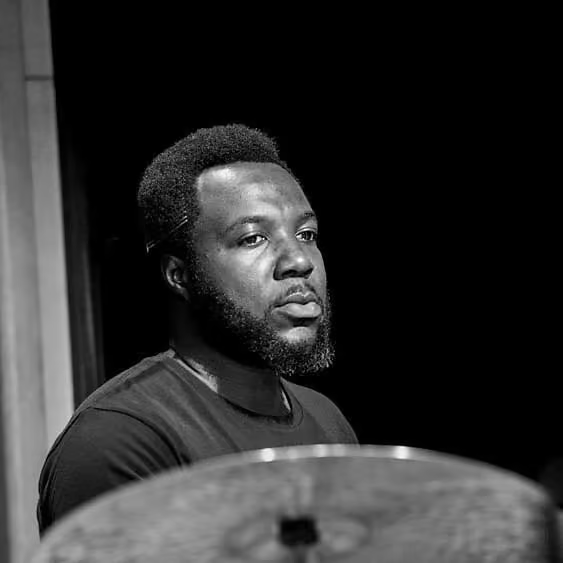
Drummer Allan Mednard was born and raised in Queens, New York. His early musical experiences involved New York City's All-City High School Music program, Bayside High School's Academy of Music, and Queens College's Preparatory Studies in Music program. He graduated with a Bachelor of Fine Arts Degree in jazz performance from the City College of New York. He has performed around the globe with ensembles led by Jeremy Pelt, Ben Allison, Kurt Rosenwinkel, and many more.
Brandee Younger
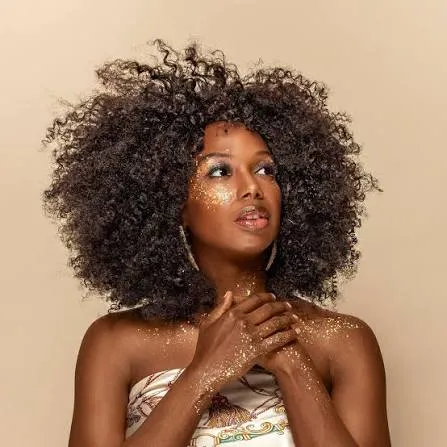
Brandee Younger
Brandee Younger
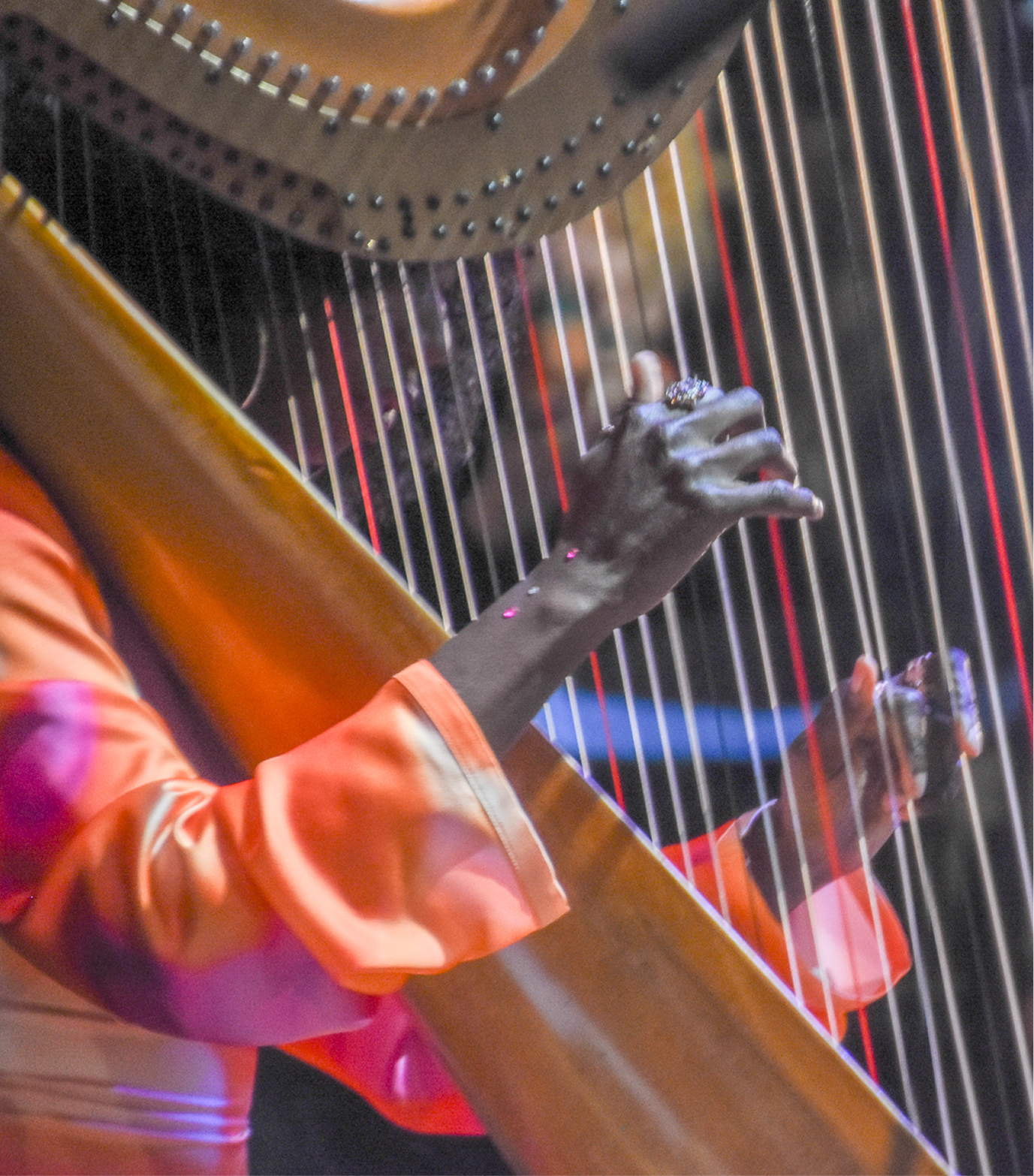
Among the most celebrated jazz artists to emerge in the 21st century, Brandee Younger is a harpist, composer and bandleader whose music connects spiritual jazz and classical training to the rhythmic soulfulness of R&B and hip-hop. She grew up on Long Island, where she sang gospel, studied the harp classically and became enamored of both hip-hop and the vintage soul that rap producers sampled. When Younger was a teenager, her father introduced her to Alice Coltrane’s music — a transformative moment that all but defined her life’s journey.
Her first LP for the storied Impulse! Records label — a.k.a. The House That Trane Built — was 2021’s Somewhere Different. A track from that album, “Beautiful Is Black,” earned Younger a Grammy nomination in the Best Instrumental Composition category, making her the first Black female solo artist to achieve this. Two years later, on Brand New Life, Younger revitalized newly discovered Ashby compositions, and that LP won the 2024 NAACP Image Award for Outstanding Jazz Album. Gadabout Season, released in 2025, is a more reflective and personal work focusing on Younger’s inimitable original music. In addition to her non-stop performance schedule, Younger is a dedicated educator, teaching on the faculties of New York University and the New School.
Cory Diane
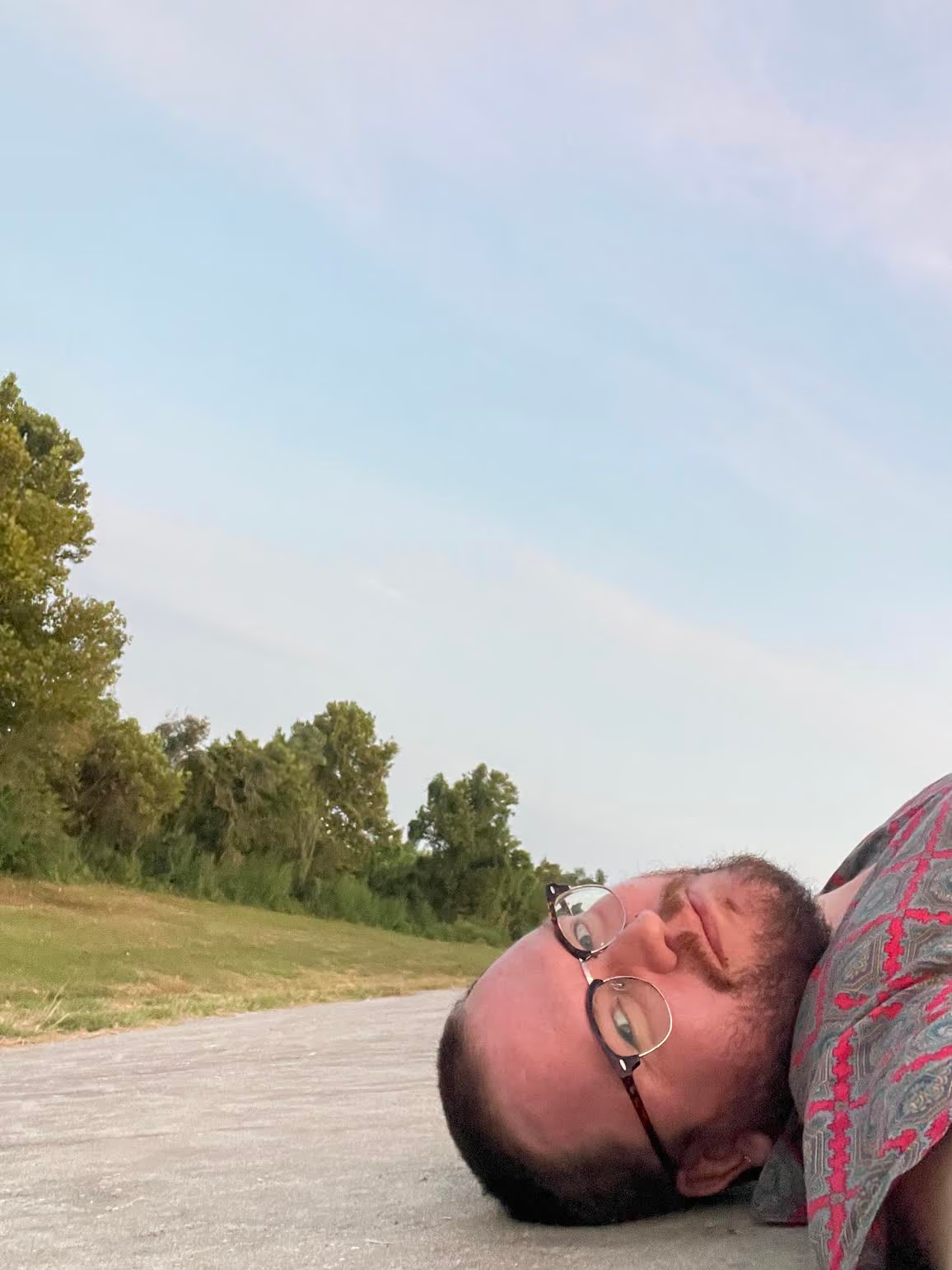
Cory Diane
Cory Diane
Diane is a performer, composer and sound artist whose work often looks at sound and vibration as means of knowing and relating.
They aim to synthesize their years of research and relationship building around Gravitational Wave Astronomy with their ongoing creative work related to climate justice, and their lived experience as a person with a physical disability and navigating chronic pain. Central to this project would be continued collaboration with the Laser Interferometer Gravitational-Wave Observatory (LIGO) physicists (based in Louisiana and across the globe), and the prototyping of a new instrument—a “harp” sounded not by the strumming of strings, but by sunlight.
Diane is writing an article and developing a multidisciplinary project. They are collaborating with scientists, musicians, and filmmakers on a project that uses sound as a means for exploring the complex ecologies and histories of the Gulf of Mexico, centering one of its most endangered and little-known inhabitants, the recently-named Rice’s Whale, a being whose critically endangered status is connected directly to the sounds of industry and oil exploration in the Gulf.
While most people are aware that marine mammals rely on sound for basic survival, navigation, and communication, it’s less understood that oil companies and the U.S. military also rely on sound, that nearly every day of the year they use sonar guns to map the floor of the Gulf of Mexico for oil exploration. These sound waves have the capacity to kill animals who are close to their line of fire, to injure those who are further out, and, because of how sound travels underwater, to diminish the precious sonic space available for marine animals living across the entirety of the Gulf of Mexico. The prevalence of sonar blasts is just one contributing factor to soundscape of the Gulf, one with devastating consequences, that connects the well being of these marine mammals to those of us living in cancer alley, to all whose presence and futures are compromised by extractive fossil fuel economies.
Dr. Christophe Jackson
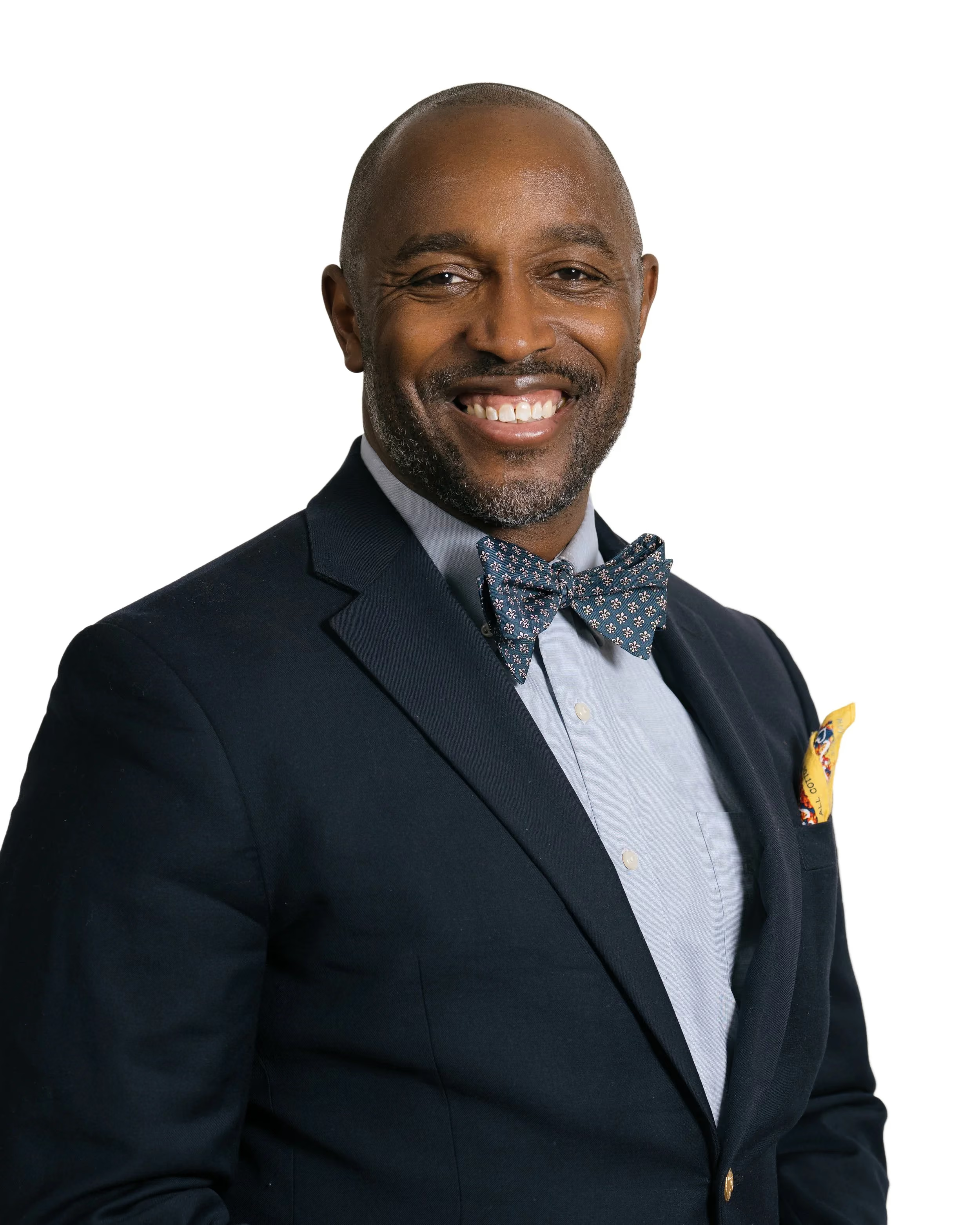
Dr. Christophe Jackson
Dr. Christophe Jackson
Dr. Christophe Jackson holds PhDs in piano performance, biology and mechanical engineering and a master’s degree in physician assistant where he studies the effects of music on cognition, performance and stress. He has completed postdoctoral training in Neuroscience and Music at Tulane University. Clinically, Jackson works as a neurosurgery, trauma, infectious disease, and urology surgical physician assistant where he utilizes his expertise to bridge access to healthcare, arts-based research, and technology. Outside of medicine, Jackson is a “musician at heart” having performed professionally as a classical and jazz pianist, keeping true to his New Orleans roots.
Dr. Josh Kun
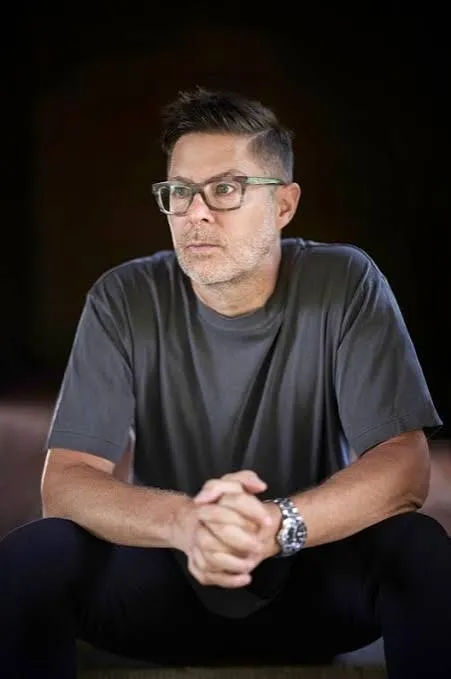
Dr. Josh Kun
Dr. Josh Kun
Josh Kun is an author and editor of many books and anthologies, and the curator of numerous art, music and public humanities projects. His research and practice focus on the arts, music and politics of cultural connection, with an emphasis on archives, global migration and Los Angeles. He has worked with The Getty Foundation, SFMOMA, the Grammy Museum, the California African American Museum, The Vincent Price Museum of Art, and more. From 2013–19, he led a trilogy of projects based on the special collections of the Los Angeles Public Library that resulted in a celebrated series of books, exhibitions, and public programs. His writing has appeared in The New York Times, Los Angeles Times, The New Yorker, and more. He co-edits the book series Refiguring American Music for Duke University Press, serves on the editorial boards of Public Culture, Journal of Popular Music Studies and the Music Research Annual, and on the boards of Dublab and the University of California Humanities Research Institute. He co-curates CALA Crossfade Lab and directs The Popular Music Project of the Norman Lear Center.
Awards and Honors:
MacArthur Fellow, MacArthur Foundation (2016)
Berlin Prize, American Academy in Berlin (2018)
American Book Award, Before Columbus Foundation (2006)
Dr. Tao Leigh Goffe
Dr. Tao Leigh Goffe
Dr. Tao Leigh Goffe
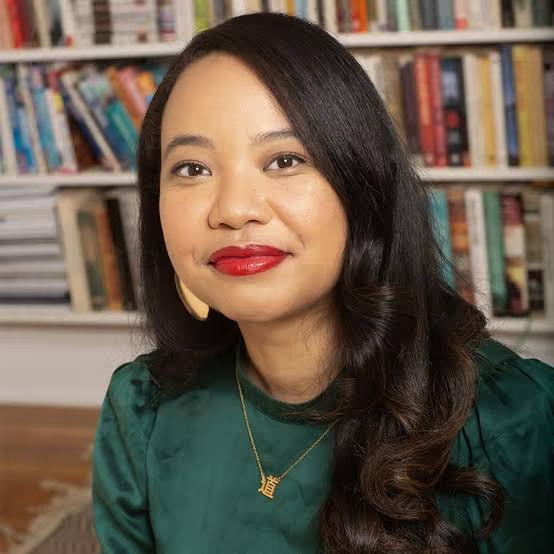
Tao Leigh Goffe is an award-winning writer, theorist, and interdisciplinary artist who grew up between London and New York. She is Associate Professor at the City University of New York and the founder of Dark Laboratory, a climate research organization which focuses on the study of race, technology and ecology. Tao lives and works in Manhattan. Dark Laboratory is her first book.
Leyla McCalla
Leyla McCalla
Leyla McCalla
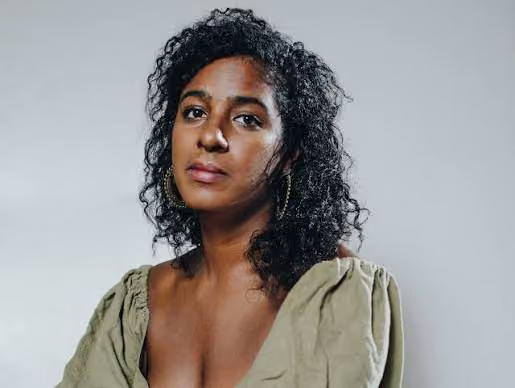
Born in New York City to Haitian emigrants and activists, Leyla McCalla finds inspiration from her past and present– her music vibrates with three centuries of history and influences from around the globe. McCalla possesses a stunning mastery of the cello, tenor banjo and guitar and, as a multilingual singer and songwriter, has risen to produce a distinctive sound that reflects the union of her roots and experience. In addition to her solo work, McCalla is a founding member of Our Native Daughters (with Rhiannon Giddens, Amythyst Kiah and Allison Russell) and alumna of Grammy award-winning Black string band The Carolina Chocolate Drops.
McCalla’s new album and fifth studio recording, Sun Without the Heat (ANTI, April 12), is playful and full of joy while holding the pain and tension of transformation. Throughout Sun Without the Heat’s ten tracks, McCalla achieves a balance of heaviness and light with melodies and rhythms derived from various forms of Afro-diasporic music including Afrobeat, Ethiopian modalities, Brazilian Tropicalismo, and American folk and blues.
Her 2022 album, Breaking the Thermometer (ANTI-), is the album companion to a multidisciplinary music, dance and theatre work commissioned by Duke Performances. Through the story of the brave journalists at Radio Haiti who risked their lives to report news in Haitian Kreyol, Breaking the Thermometer identifies the critical importance of a free and independent press to promote self and societal liberation. Breaking the Thermometer was named one of the Best Albums of the year by The Guardian, Variety, Mojo and NPR Music, and her song “Dodinin” made Barack Obama’s short list of favorites. McCalla was awarded the 2022 People’s Voice Award by Folk Alliance International, an award given to artists who unabashedly embrace social change in their creative work.
While conceiving her next project, McCalla expanded her musical palate and revisited her longstanding creative influences. “I like when music feels urgent,” McCalla says, “but I also wanted the new album to be playful and fun. I wanted that levity to come through.”
On Sun Without the Heat, McCalla draws lyrical inspiration from the writings of Black feminist Afrofuturist thinkers including Octavia Butler, Alexis Pauline Gumbs, and adrienne maree brown. Like these authors, McCalla looks to songwriting as a way to increase faith and hope, encourage community thinking, and catalyze personal transformation. “Songwriting is a modality to tell the stories that need to be told,” she explains. “Sometimes these are painful stories to tell.”
This is especially vivid in the album's title track, which pulls from Frederick Douglass’s 1857 speech to a largely white crowd of abolitionists six years before the Emancipation Proclamation. His words echo in the song: “You want the crops without the plow / You want the rain without the thunder / You want the ocean without the roar of its waters.” Douglass’s point — which McCalla weaves into the song's central message —is that liberation and equity are not possible without committing to transformative action.
“We all want the warmth of the sun but not everybody wants to feel the heat,” McCalla explains. “You have to have both.”
Moved by this speech, and by Susan Raffo’s 2022 book Liberated to the Bone, McCalla asserts this idea fully by adding the lyric: “Can’t have the sun without the heat.” This song serves as a reminder of the continued work for social change and the struggle that we still bear. “These wounds,” McCalla reminds us, “are so old.”
Sun Without the Heat was recorded in an intense nine-day session at Dockside Studies in New Orleans. Produced by Maryam Qudus, McCalla was joined by longtime bandmates and collaborators Shawn Myers on percussion and drums, Pete Olynciw on electric bass and piano, and Nahum Zdybel on guitars. Qudus is featured on synthesizers, organs and backing vocals.
“Usually, I go into the studio and have the songs and the framework already in mind,” says McCalla. “But with this album, we built the frame in real time. It was an intimidating process, but it also helped me realize how held I am by the musicians I work with.”
The result is a transcendent collection of songs that hold the personal and universal, carrying grief and joy at once. Through this album, McCalla explores the elements of transformation and the heat necessary to move from darkness toward light.
Sun Without the Heat will be released via ANTI- Records. McCalla is also currently the Artist in Residence at the University of Richmond.
Rashaan Carter
Rashaan Carter
Rashaan Carter
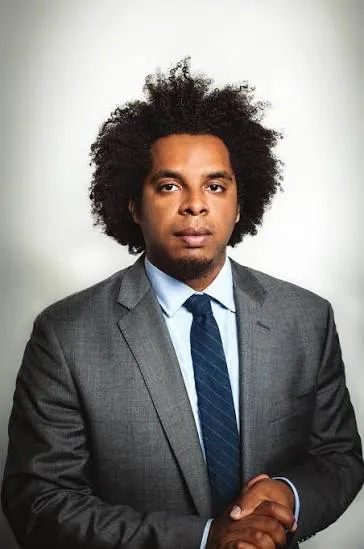
Rashaan Carter grew up in the Washington, D.C. area. Through the nurturing of his father, a saxophonist, and his mother, a jazz radio programmer, Carter forged an interest in music. After stints with various instruments, the bass became the voice for his musical expression. He worked and gained experience in Washington’s local music scene, and after high school, moved to New York City to attend The New School University. At the New School, he studied with Buster Williams and began to work with many of the university’s faculty, including Joe Chambers and Jimmy Owens. Since moving to New York, Carter has worked with Wallace Roney, David Murray, Henry Threadgill, Ravi Coltrane, Geri Allen, Nicole Mitchell, Benny Golson, Curtis Fuller, Louis Hayes, Marc Cary, Cindy Blackman, Doug and Jean Carn, Antoine Roney, Sonny Simmons and more. He has also studied with Ron Carter. Rashaan regularly performs with a myriad of artists around the world and can be found on various recordings as well.
Maxine Gordon
Maxine Gordon
Maxine Gordon
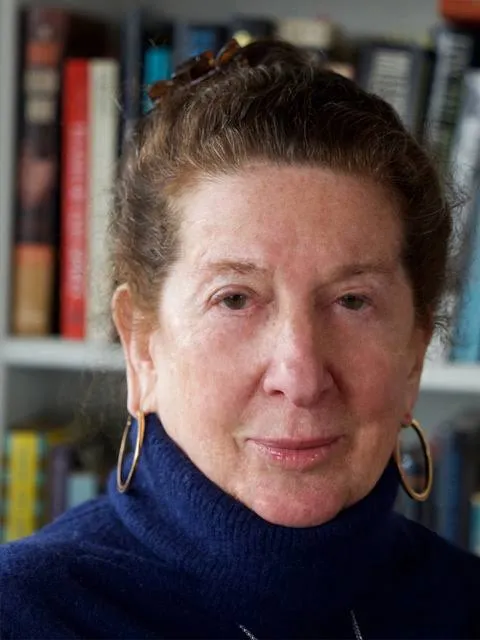
Maxine Gordon's journey is a chronicle of unwavering dedication to Jazz, its history, and its transformative role in society. Her story begins in the late 1950s in New York City, where as a teenager she discovered her passion for Jazz on Sunday afternoons at The Village Vanguard in Greenwich Village. This early exposure was more than an introduction; it was the seed that grew into a lifetime of advocacy and scholarship in Jazz.
In the 1970s, Maxine's career took a professional turn. She worked as a road manager and tour manager spending significant time touring in Europe and the U.S. with bands, gaining invaluable insight into the music industry. This experience honed her skills in managing and understanding the nuanced needs of musicians, setting the stage for her influential role in the decades to follow.
She had extraordinary mentors in the music business including legendary agent Jack Whittemore (agent for Art Blakey, Ahmad Jamal, Stan Getz, and Horace Silver), Jim Harrison (promoter, publisher, musician’s advocate), and Max Gordon (owner of The Village Vanguard).
From 1975 into the 80s, her work was marked by her substantial contribution to the Jazz world, particularly in managing and guiding the career of her husband, the legendary saxophonist Dexter Gordon and, and in partnership with legendary record producer Michael Cuscuna, Maxine became Executive Producer of albums by Dexter Gordon, Woody Shaw, and Shirley Scott.. Her role was pivotal in managing Dexter's cinematic appearance in the Bertrand Tavernier film "Round Midnight," where she ensured the authenticity of the film by advocating for the inclusion of Jazz musicians who also performed in the film. Her work extended to producing concerts at iconic venues including Carnegie Hall and Lincoln Center and prestigious academic institutions including Columbia and Harvard University, showcasing her deep commitment to promoting Jazz in various spheres.
The 1990s and beyond saw Maxine delving into archival research and historical preservation, particularly following Dexter Gordon's passing in 1990. Her seminal work, Sophisticated Giant: The Life and Legacy of Dexter Gordon (University of California Press) not only chronicled Dexter's life but also highlighted the broader narrative of Jazz and its impact on society. This period solidified her position as a leading figure in Jazz historiography, earning her accolades like the Deems Taylor/Virgil Thomson Award and the Jazz Journalists Association Best Jazz Book of the Year in 2019 with rave reviews in the New York Times and other international publications. Maxine traveled over 65,000 miles touring with book talks internationally including Madagascar.
Maxine's current project, Quartette: Stories from the Lives of Four Women Jazz Musicians, focuses on the lives of Maxine Sullivan, Velma Middleton, Melba Liston, and Shirley Scott. This work underscores her commitment to bringing to light the often-overlooked contributions of women in Jazz. Her involvement in projects like the Bronx African American History Project and her role as a senior interviewer and Jazz researcher further exemplify her dedication to preserving and disseminating the rich heritage of Jazz.
Throughout her career, Maxine has been a trailblazer and a role model, especially for women in the arts. Her work transcends mere documentation; it is a celebration of the resilience and creativity of Jazz musicians. By preserving their stories, she ensures that their contributions are recognized and honored, thus influencing a new generation of artists and historians. Her approach to Jazz history, particularly through the innovative lens of Jazz geography, has reshaped the way we understand the music's cultural and social impact.
Maxine's global travels, her lectures, and her presentations at symposiums and universities worldwide have not only spread the gospel of Jazz but also emphasized the genre's role in championing social change and equality. Her efforts as an archivist for three Library of Congress Dexter Gordon collections and her leadership roles in various Jazz-related organizations, including the Dexter Gordon Society and the Mary Lou Williams Foundation, highlight her tireless work in ensuring that Jazz, a music born out of struggle and resilience, continues to be a force for empowerment and representation.
Maxine Gordon's work in African Diaspora historical research stands as a testament to her profound commitment to uncovering and preserving the rich tapestry of Jazz history and its deep roots in African American culture. Her academic journey, marked by a Master’s Degree in African Diaspora History from New York University, signifies her dedication to understanding the complex narratives that form the backdrop of Jazz. Her mentor, the legendary Robert Farris Thompson, gave her the road map to approach her work in Jazz history from an innovative lens through which she analyzes her subjects. Maxine's scholarship not only contributes to the academic discourse but also serves as a powerful tool for social change, highlighting the significant impact of African American musicians and the importance of preserving their legacy.
Maxine Gordon's story is not just about her achievements but also about her role in shaping a more inclusive and equitable narrative in the arts. Her life's work serves as a beacon, guiding and inspiring those who seek to preserve the integrity and truth of art. As she continues her research and writing, especially through her work at the Radcliffe Institute for Advanced Study at Harvard University, Maxine stands as a testament to the power of passion, knowledge, and advocacy in transforming societies. Her legacy is a reminder that the arts are not just a reflection of society but a powerful tool for shaping its future, particularly for women and underrepresented groups. Maxine Gordon remains an unparalleled figure in Jazz history, a pioneer whose influence extends far beyond the music itself, embodying the spirit of Jazz in its purest form.
JGI New Orleans partners with local universities to support visiting national and international scholars to continue research on existing projects or initiate new research that incorporates New Orleans and/or the Gulf South as a key component. JGI New Orleans Visiting Scholars and Fellows offer community talks, workshops, university-co-sponsored symposia and lectures, and receive archival and library access at their host institution and beyond.
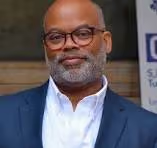
Dr. Timothy Mangin
JGI New Orleans Fellow
JGI New Orleans Fellow
Timothy Mangin is the 2026 JGI New Orleans Fellow. He completed his PhD in Ethnomusicology at Columbia in 2013 with a dissertation on Senegalese mbalax advised by Prof. George Lewis. Mangin is an ethnomusicologist and musician researching the intersection of popular music, race, ethnicity, religion, and cosmopolitanism in West Africa and the African Diaspora. He has received fellowships from the Columbia University’s Center for Comparative Literature and Society, St. Lawrence University’s Department of Music, Mellon Foundation, the Foreign Language Areas Studies Program and a Fulbright-Hays Doctoral Research Abroad Program. Before joining the Boston College faculty he taught at Columbia University, New York University, St. Lawrence University, and the City University of New York. An improvisational flutist, Tim founded St. Lawrence University’s Jazz and Improv Ensemble and also studies mbira and is a member of Capoeira Brasil. His writings have appeared in the edited volumes Begegnungen: The World Meets Jazz and Uptown Conversations: The New Jazz Studies as well as reviews in The Yearbook for Traditional Music and Ethnomusicology On-Line. Tim is working on a book examining indigenous cosmopolitanism through the intersection of the Senegalese urban dance music mbalax and the practice of black, Wolof (the dominant ethnic group), gendered, and Muslim identities. He is also exploring blackness in Senegalese hip hop and the dynamics of improvisation in New York City’s underground hip hop and jazz scene. The Digital Humanities is a key part of Tim’s pedagogy and research that began when he worked at Columbia’s Institute for Research in African American Studies on the Malcolm X Project, under the direction Manning Marable, and further developed with students at The City College of New York.