November 23, 2026
The Emancipation of a Music Department
Before he forever changed modern gospel music, Richard Smallwood was part of a revolutionary moment—musically and politically—at Howard University.
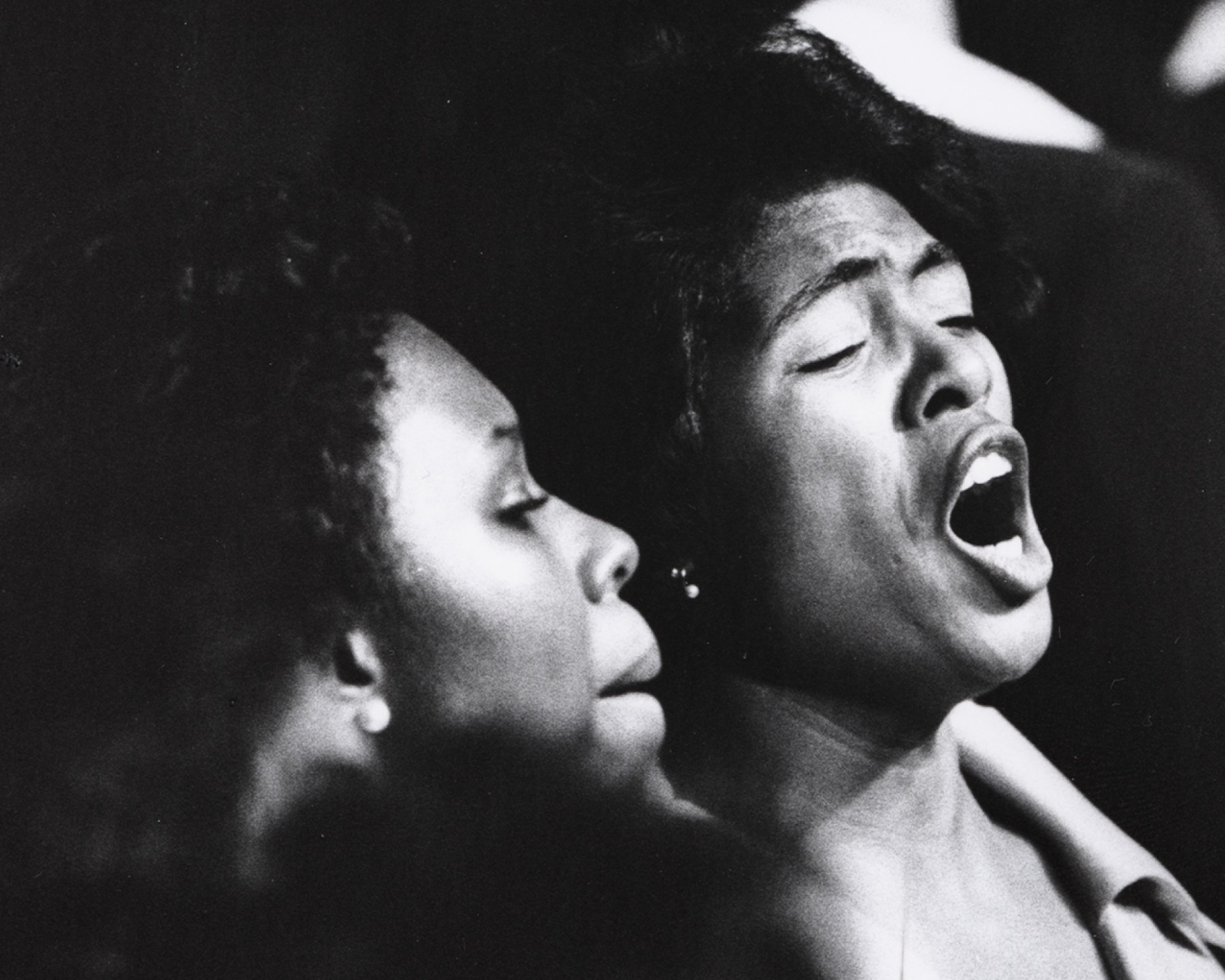
The Richard Smallwood Singers at the Festival d'Automne in Paris, 1977. Jean-Luc Manaud/Médiathèque de la Photographie et du Patrimoine
We are told revolution is improbable. But that was not the case at Howard University in the late 1960s. The academy was a battleground. And there was no letting up inside nor beyond the university’s wrought-iron gates.
One of the primary demands of the student movement on campus in 1968 had been the establishing of a program devoted to Black music. Miles Davis noticed and applauded. He was, in turn, invited to lead the music school. Speaking to Rolling Stone in December 1969, he recalled his response to the invitation: “Hell no! See, I don’t think like that, man. I don’t like them bourgeois n----s. That’s why they’re rebelling at Howard. For a long time, they wouldn’t even have jazz concerts on the campus of Howard University.” This was all despite its being the onetime home to musicians and writers who shaped jazz, including Shirley Horn, Benny Golson, Sterling Brown, and his students Amiri Baraka and A.B. Spellman. But just like in Miles’s music, the late ’60s saw a new and revolutionary momentum guiding Black folk, inviting us to turn inward and outward in search of a total sound, a way forward and beyond.
While neither Miles nor his recommended choice for the post, Dizzy Gillespie, would come to Howard, another leading figure, the trumpeter Donald Byrd, said yes. He arrived in 1968 to establish a jazz program, bringing with him a conception of the music that was unconcerned with the boundaries and borders of so-called “mainstream jazz”—a journalistic designation with almost no meaning for musicians. This was the groove-forward Donald Byrd of Kofi and Ethiopian Knights, after all. His most famous Howard students became the Blackbyrds, their name inspired by his funky 1973 statement Black Byrd. Adhering to genre convention would miss what another Howard alum Toni Morrison once named “the rootedness” of Black creative power. Or, as Black Arts theorist Larry Neal said of the Blues, this kind of music was an attempt to render Black experience “in the most profound, most intense manner possible.”
This is one way of understanding how it was possible that Byrd could also be responsible for helping one of the greatest composers of the next half-century achieve recognition, even though he never was known for playing “jazz.” This student would become the leader of Howard’s first gospel ensemble — which Byrd often invited to open for Howard’s jazz band, and then later to the 1973 Montreux Jazz Festival (where the Blackbyrds’ performance was also recorded by Blue Note). That student’s name was Richard Smallwood.
Born in Washington, D.C., in 1948, Smallwood was part of a family with roots in Durham, North Carolina. His stepfather, C.L. Smallwood, who played a gritty blues-gospel style on the piano, was a church planter, which led the family to many different sites across the Eastern seaboard and Midwest. (This and all biographical information on Smallwood is from his 2019 autobiography, Total Praise.) Theirs was a tumultuous relationship, to say the least—but it was his father’s urging that led young Richard to develop his chops on the piano, learning the hymns in every key and eventually leading his own ensembles. After he turned ten, Smallwood’s mother, Mabel, herself a gifted singer, put her foot down and all the moving stopped. Richard was able to establish roots in a D.C. where churches still opened services in common meter, with lined-out hymns. It’s where he was exposed to some of the greatest pedagogical talents in Black music.
The late ’60s saw a new and revolutionary momentum guiding Black folk, inviting us to turn inward and outward in search of a total sound, a way forward and beyond.
Smallwood’s earliest musical memory was Mabel’s radio playing the secular standard “Moonlight in Vermont,” likely performed by the pop artist Jo Stafford. That moment, and a growing affinity for women vocalists in the gospel tradition, fed his love for music. Groups like the Davis Sisters, the Clara Ward Singers, and the Roberta Martin Singers—specifically their pianist Lucy Smith Collier—channeled that love into an approach that was inflected equally with classical overtones and jazz arpeggios. Gifted with perfect pitch, Smallwood would accurately copy their songs, integrating elements of each’s style into his own. He soon became known on the gospel circuits of D.C. But sacred music was not his only interest.
One of Smallwood’s many music teachers in D.C.’s public schools was Roberta Flack, who had been trained at Howard in Western classical piano before she made other plans. Two other classical piano teachers were central to Smallwood’s evolution. He believed that he had duped Beatrice Gilkes into thinking that he could read music by first asking her to demonstrate the style and feeling of whatever piece he was learning, before perfectly mirroring what was played for him. But when she recommended him to Howard’s Junior Department as a high schooler, his new teacher Anne Burwell asked him to sight-read before doing anything else. The charade was over. Now, he would be forced to learn. From there, his interest in the classical idiom grew.
D.C.’s Black community was no stranger to that style. Many of the larger Black churches held concerts and recitals at the turn of the century where young talents demonstrated their mastery of this form, almost as a way to prove to the world that Black folk could. Classical music was akin to liberal education, and for many teachers like Joseph Douglass (grandson of Frederick) and Mary Europe (sister of James Reese), this was a serious matter for the race’s uplift. This was true at Howard too. Led by Lulu Vere Childers, the Department of Music was actually founded as a conservatory in 1913. When Warner Lawson arrived in 1942, the Negro college classical tradition, imbued with an academic approach to the spirituals, was the norm and standard. For what it was worth, Smallwood and others found ways to grow within that tradition and did not disparage what it could do. Learning from his piano and voice teachers and the rigor through which they projected that tradition shaped him greatly.
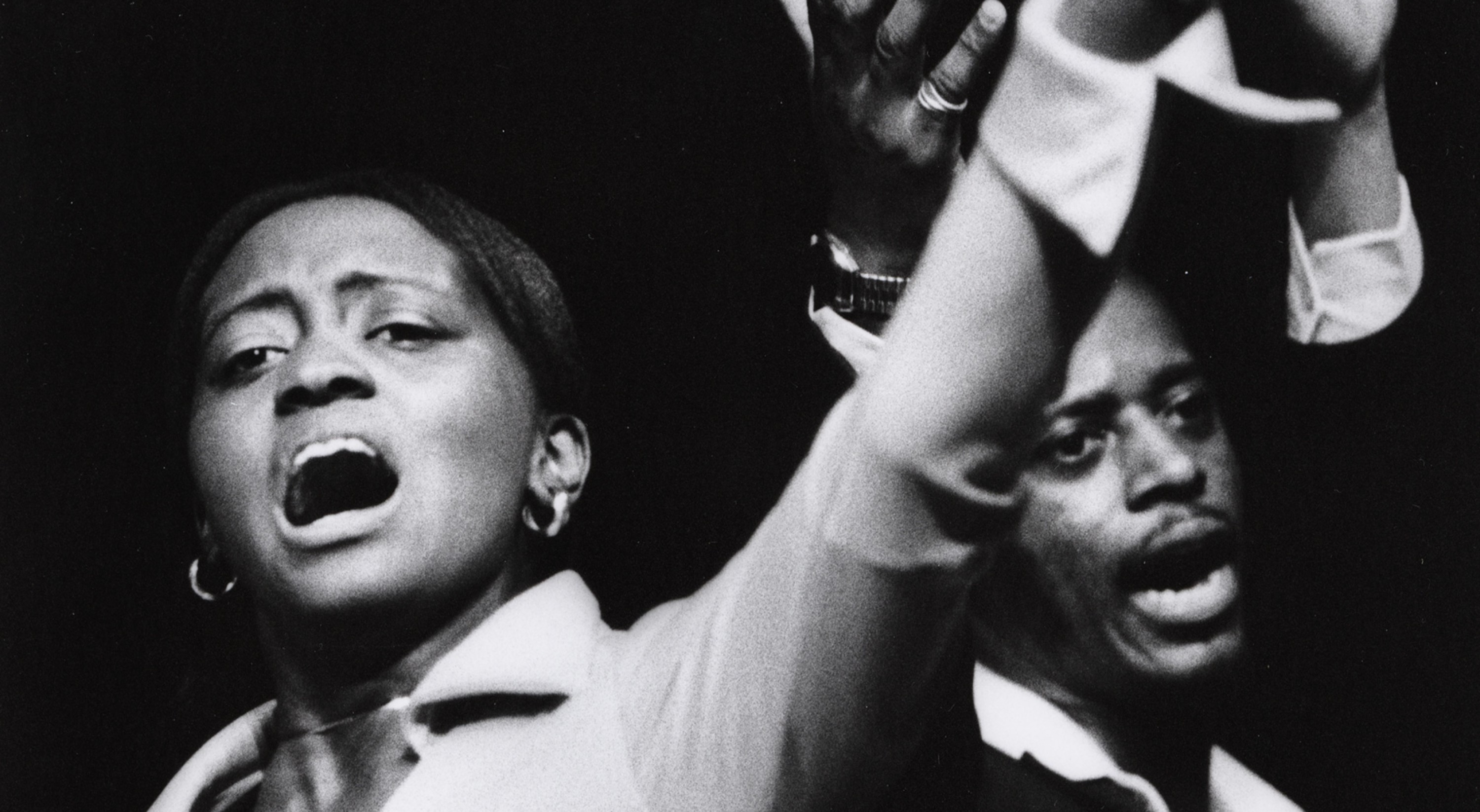
But when he completed the requirements of his Junior Department program and received a scholarship to begin an undergraduate degree in 1967, there was another sound brewing beneath this official one. Some of his teachers, like Anthony Kerr could cross the aisle. But others scoffed at the idea of gospel. Lawson was famously known to inspect the practice rooms where students would sneak in to practice gospel and jazz changes. Students even knew to look out for Lawson’s watchdog, Mr. Coleman, the building’s janitor, who might report them if he heard them playing anything insufficiently classical-sounding after hours.
Many of Black music’s future legends were in these practice rooms during this era. There were the Mizell Brothers, producers of several Donald Byrd and Blackbyrds projects. Larry Mizell’s compositions also appeared on albums by flutist Bobbi Humphrey and saxophonist Gary Bartz, produced through the brothers’ Sky High Productions. Trumpeter Fonce Mizell was also a member of Motown’s famed Corporation, which had laid down the signature popular sounds of that era. Then there was Donny Hathaway, who was already a star on campus when Smallwood arrived. While at Howard, before becoming the Donny we all know, he was working out the relationship between gospel, blues, and jazz and the common harmonic connections of these styles. Arriving a few years after Smallwood was his friend Elbernita “Twinkie” Clark of the Clark Sisters—who would become the definitive heirs of the early vocal ensembles that had inspired him. Then came Geri Allen at the end of the decade. During these years, this space housed many experiments in crafting a total Black sound that would transform the music and the industry along with it.
It was during Smallwood’s freshman year that students occupied the administration building for five days in March 1968. The following fall, they called for a Black University. The school’s Fine Arts students knew that a Black University would need its own sound. So the protestors also made the case for jazz.
The establishment of the jazz studies major meant these musicians were able to move beyond playing in secret. And when Black pentecostal students convened a gospel concert at Howard’s Rankin Chapel on the heels of Dr. King’s assassination in April 1968, it would set in motion the idea that Howard needed its own mass choir devoted to the kind of worship that could offer relief and healing. Smallwood played organ and helped recruit the first vocalists for the concert, then stayed on to play for the newly established Howard Gospel Choir, formed later that year. It was not that the classical training fell away or was abandoned. But it would now have to exist alongside, rather than above, the sounds Smallwood had made with his people.
Smallwood’s small gospel group, the Celestials, which he started along with Wesley Boyd and Edward Sully around the time of the larger gospel choir’s founding, was the first of its kind on campus. Its name was later changed to Celestial Sound, as if to mirror the esoteric vernacular of Pharoah Sanders, Alice Coltrane, and Sun Ra, which was as much a part of the Black Arts ethos as any. Smallwood was also leading the young adult choir at Union Temple Baptist Church in D.C., the last church that his father helped establish. One of C.L. Smallwood’s last blessings, granted upon Richard’s graduation from Howard, was to give his son permission to pursue music in the “worldly” arena.
Like jazz, the soul/R&B sound was also undergoing a cosmic shift, in which Hathaway as well as his Howard roommate and Curtis Mayfield collaborator Leroy Hutson played major parts. Smallwood haunted the practice rooms at Childers Hall for months after he graduated, and it was then that he first encountered a young Ángela Winbush playing piano and singing one day. He was immediately struck and perplexed that someone this skilled was studying architecture and not music. Not long after, along with other Howard student vocalists Tawatha Agee and Elett Ricks, they founded the R&B group Hot Tea. It was a short-lived but important marker in Smallwood’s journey.
In the end, there was no more important influence upon Smallwood than the approach to gospel music espoused by Edwin Hawkins, who released “Oh, Happy Day” in 1968 while Smallwood was on campus. From then on, Edwin and his brother Walter, as well as Walter’s wife Tramaine, would be mainstays in Smallwood’s circle of peers, and in the history of gospel. It was their brand of music that Smallwood and the gospel choir performed on that revival night in Rankin Chapel. Soon thereafter, it would coalesce into the “contemporary gospel” sound that Winbush, Sully, Boyd, and others in the evolving and rotating cast of the Richard Smallwood Singers, and the later group Vision, made famous. Smallwood’s compositional language blended the traditional blues-gospel of his childhood with the classical training of his Howard years, delivered with an emotional vitality that took the “faith” to mean the thing you must turn to when you are in your darkest moments. Experiencing this sound live would simply wreck you.
From birth, mysterious presences literally and figuratively haunted Smallwood.
From birth, mysterious presences literally and figuratively haunted Smallwood. He would experience visions and attributed certain happenings in his life to malevolent forces. These events eventually coincided with deep questions regarding his paternal roots that were not resolved until very late in his life. As Smallwood struggled with these demons he created songs like “Center of My Joy” and “Total Praise,” with sounds that register what it feels like to lean on help in a time of trouble. These compositions tarry in the dark only to foreground chord progressions and mood shifts that celebrate the source of a strength more powerful than the evil. Depression and melancholy were life experiences that could be confronted and maybe even displaced through the healing attributes of gospel.
Smallwood’s career spawned massive success in virtually every way imaginable. But it was all grounded in the “aesthetic” material of Black music and how it was defined at Howard.
While performing in 1973 in Montreux with Celestial Sound, Donald Byrd, the Blackbyrds, and others from the Howard nexus, Smallwood met the Prince of Darkness himself. There were few words. They were all moved, of course, by Miles’s set. Maybe they mentioned they were from Howard. But as they heaped praise upon him, all Miles could offer back to them was, “Yeah, I know.”
When Richard Smallwood made his transition last year, all I could offer to those who felt that loss acutely was, “Yeah, I know.” But less known is how Smallwood’s music has grounded generations of “jazz” musicians who bring the sacred directly into their play. It transcends and breaks apart the notion of genre. Smallwood’s music was everything, because it emanated from a praise tradition that was everything Black, at the same time it was everything else that it was.
Just days before the release of a project he titled Gospel Music, vibraphonist Joel Ross sat down and arranged a version of “Total Praise” to close the sets on his band’s upcoming tour. All of the music on that album spoke to something elemental — indeed, something total. Fitting, then, that it all came together at the end with a Smallwood composition that was only made possible by the revolutionary coming-together of so many seemingly disparate forces in the history of both a university and a community. Yeah, I know.
Donald Byrd, Ethiopian Knights (1972)
Donald Byrd, Kofi (1995)
Donald Byrd, Black Byrd (1973)
Richard Smallwood, Total Praise (2019)
Richard Smallwood Singers, "Center of My Joy" (1987)
Richard Smallwood Singers, "Total Praise" (1990)
Joel Ross, Gospel Music (2026)
RELATED ARTICLES