
November 17, 2026
Lines, Lost and Found: A Port Diary
Growing up in New Orleans, I knew Buddy Bolden's name before I knew why. Learning his story felt like a body blow.
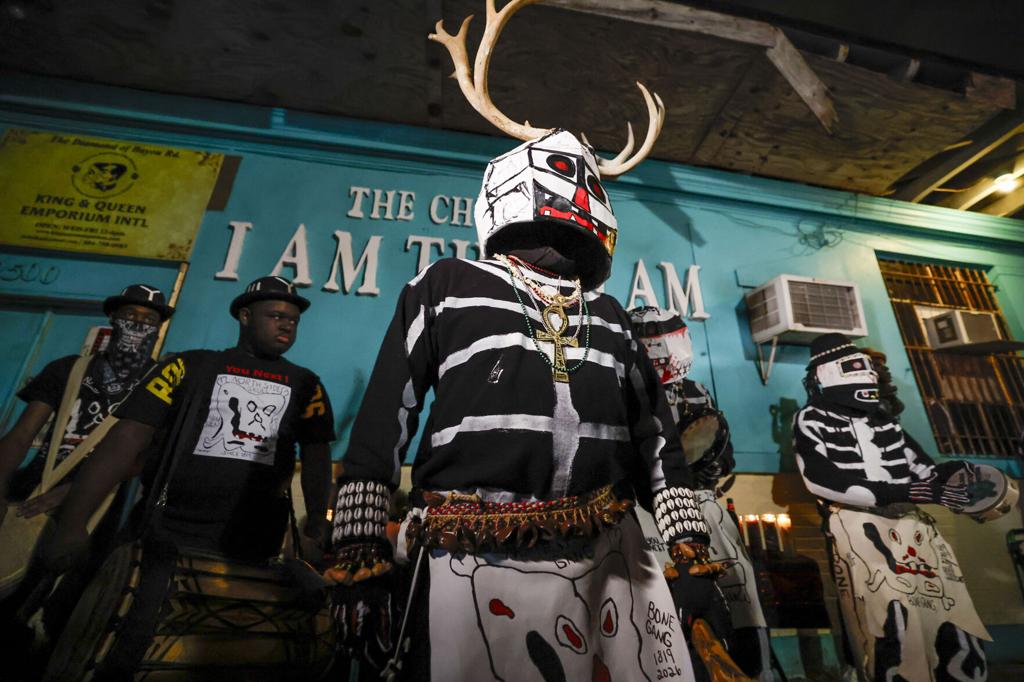
Northside Skull and Bone Gang. David Grunfeld
"We go to war; then we reach birth."
—Mahmoud Darwish
Two Cities
June
Black Hawk is a watchman!
Ports have long been meeting points for humanity, and places of exchange. In distortion they became sites where people were exchanged for money and other “high value” goods—the birth of capital. In states of captivity and quasi-freedom, trafficked people carried with them the deities of their homelands, met new ones on the journey across waters and still new ones in new lands. Heard and held, rendered here as a line or multiple lines of connection and rupture. Spirit continues to tap, strum, and hum out new ways to exist.
Today, I am writing about two ports, Basra and New Orleans, where Black sacred music keeps memory in both public and private space. Across vast distances, the history of slavery and revolt echoes into the present. In Amir Al-Azraki and Thawrah Yousif Yaqoob’s, “Afro-Iraqi Rituals: Stigma, Discrimination, and Resilience,” the inner world of the makeeds of Basra, Iraq are illuminated. The Khishba, a small wooden drum created by Black laborers in Iraq from the remnants of ships, is one of the instruments that keeps rhythm. In the makeed, Black Iraqi sacred spaces for ceremony, the good djinn are called in to duel with the bad.The maidan, the spiritual and ritual battlefield, marks the spot where these beings of smokeless fire, free to occupy states of good, evil and moral neutrality, will begin their fight. The private rituals of Black Iraqis have persisted primarily through its oratory and ritualistic method of transmission. Sound and spirit remembering what the mind and body may have been forced to discard in the name of survival. In New Orleans, the drum is also time keeper, history holder, story teller. On Carnival morning, a day to hold humans account, skeletal spirits beat out a call to all that hear, to wake up.

In Jean Michel Basquiat's painting, Dwellers in the Marshes, Basquiat depicts kings as common men; common men as kings. Before the men, an abyss, a void, a portal, a shrine appears. The black marking is significant and meant to be paid attention to. Basquiat creates this knowing for the viewer through deft and precise use of line and smear. In this reading of the painting, I imagine it as a dwelling for ceremony. One figure holds a scroll, their cow is spattered with red, the other, a staff—an instrument. When I’m quiet, the painting emits a sound. I hear the music from inside. When I listen, I travel. Open the door, and cross the threshold.
Black Hawk is a watchman!
September arrives and I am a freshman in college. I sit in Liberation Theology class with my head on the desk listening to Father speak. He is wearing his priestly collar today. Softly playing from a tape deck on his desk, the unidentified chants of priests, perhaps Gregorian.
“This country will be at war for the rest of your natural lives. It might be wise to start thinking, seriously, about how you and your descendants plan to survive. The old ones did it for us and so must you do it for the ones that are to come. If you accept this framework”, he says, “it does not matter what day it is. The point is, the point is, the point is”, Father says, “is to understand that when things like this happen, the powerful will have to find ways to assuage their fears. The casualties will be foreign and domestic. The deaths will remind them and us that they are, in fact, immortal, infallible, and invulnerable. This is always a brutal process. The point is to remember that oppression is unnatural. That it makes the human body recoil and that resistance is never futile. Not even when chained together and defecating where you lay. It will always require a fight. This is your duty. This is what it takes to have the will to make a new generation.”
The Watchman
June
Black Hawk is a watchman!
Growing up in New Orleans, I know Buddy Bolden's name before I know why. When I come of age and into his story, it is a body blow. Grief you grow old enough to understand in New Orleans (if you’re lucky)—the price of genius. You will pay the cost. For Bolden it is life in an asylum while outside his sonic influence grows the world over. The sounds from his coronet, never recorded, live on quantumly, in a way that is better not to linger on too long, lest you collapse the wave.
In so many other places in the United States there is a more vast separation between the sacred and the secular, between the so-called angels and devils of society. In New Orleans this music incubated side by side. Jazz, Gospel and elements of the Blues laying in and atop and across from one other. In Mother Catherine Seals’ Temple of the Innocent Blood, and the more than 200 spiritual churches that were identified in Claude F. Jacobs’, “Spirit Guides and Possession in the New Orleans Black Spiritual Churches,” from the 1920s through 1990s, some of the earliest sounds of jazz existed in tandem with sacred hymns.
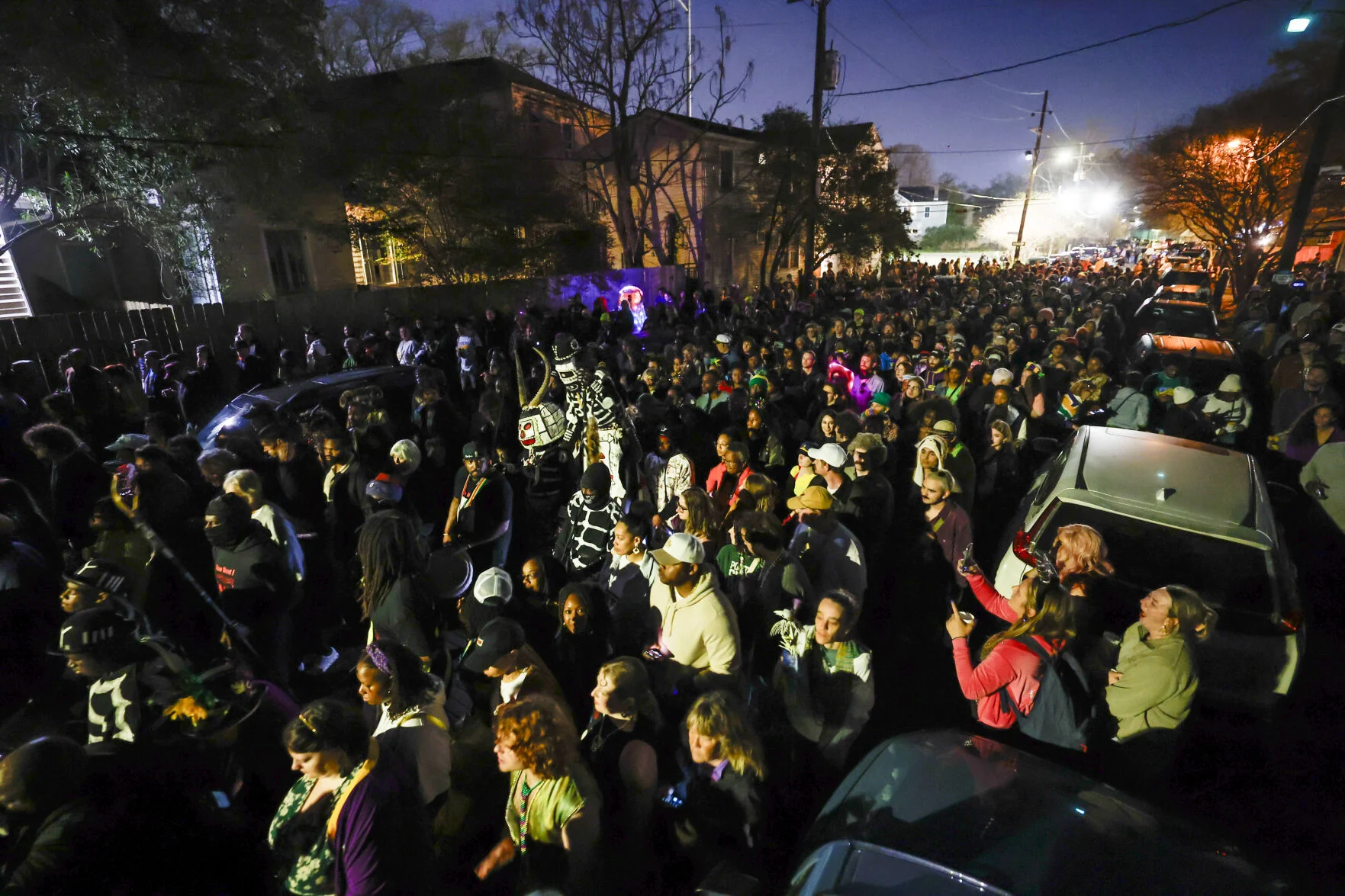
In the early 1920s, due to the continued codification of Jim Crow laws, Black members were expelled from the Spiritualist Association of Churches. Many Black congregations would drop the “-ist” from their names and continue on as “Spiritual” churches to distinguish themselves from the white Spiritualist movement. The Spiritual churches of New Orleans practiced their own particular blends of Protestant Christianity, Catholicism, Vodou, Hoodoo, and Voodoo, with some churches emphasizing particular African rooted traditions and/or Christianity more than others. Each church was highly influenced by the spiritual outlook of its head. Mother Leafy Anderson, progenitor of the movement, brought Black Hawk (Maktaimeshekiakiah) into the New Orleans pantheon. A Sauk leader born in Illinois, Black Hawk’s raids against the United States military to restore his people’s rights to their lands east of the Mississippi became a source of inspiration for oppressed peoples along the river. Anderson venerated him in her congregation alongside other spirits like Uncle Bucket and Queen Esther.
In late April of 2026, rain began to fall again on the marshes of Iraq. Plagued by years of drought, some marshes had completely dried between the years of 2021-2025. I had been reading Basrayatha: The Story of a City by Muhammad Khudayyir again, alongside Kalamu Ya Salaam’s, Be About Beauty and thinking about New Orleans and Basra, about sugar and dates, about sweeteners and blood, and spirit and sound. Iraq is a land of dates. The traffic in them worldwide driving labor patterns in the country for centuries. In the wake of the Haitian Revolution and resulting Louisiana Purchase, the Louisiana territory would become the chief sugar colony of the nation, now doubled in size. The Black Spiritual churches of New Orleans that occupied the back of homes, storefronts, bars and whatever space could accommodate them, have gone in the two decades since Katrina. Water and war and gentrification and red tape destroying this network in their physicality, but not their philosophy.
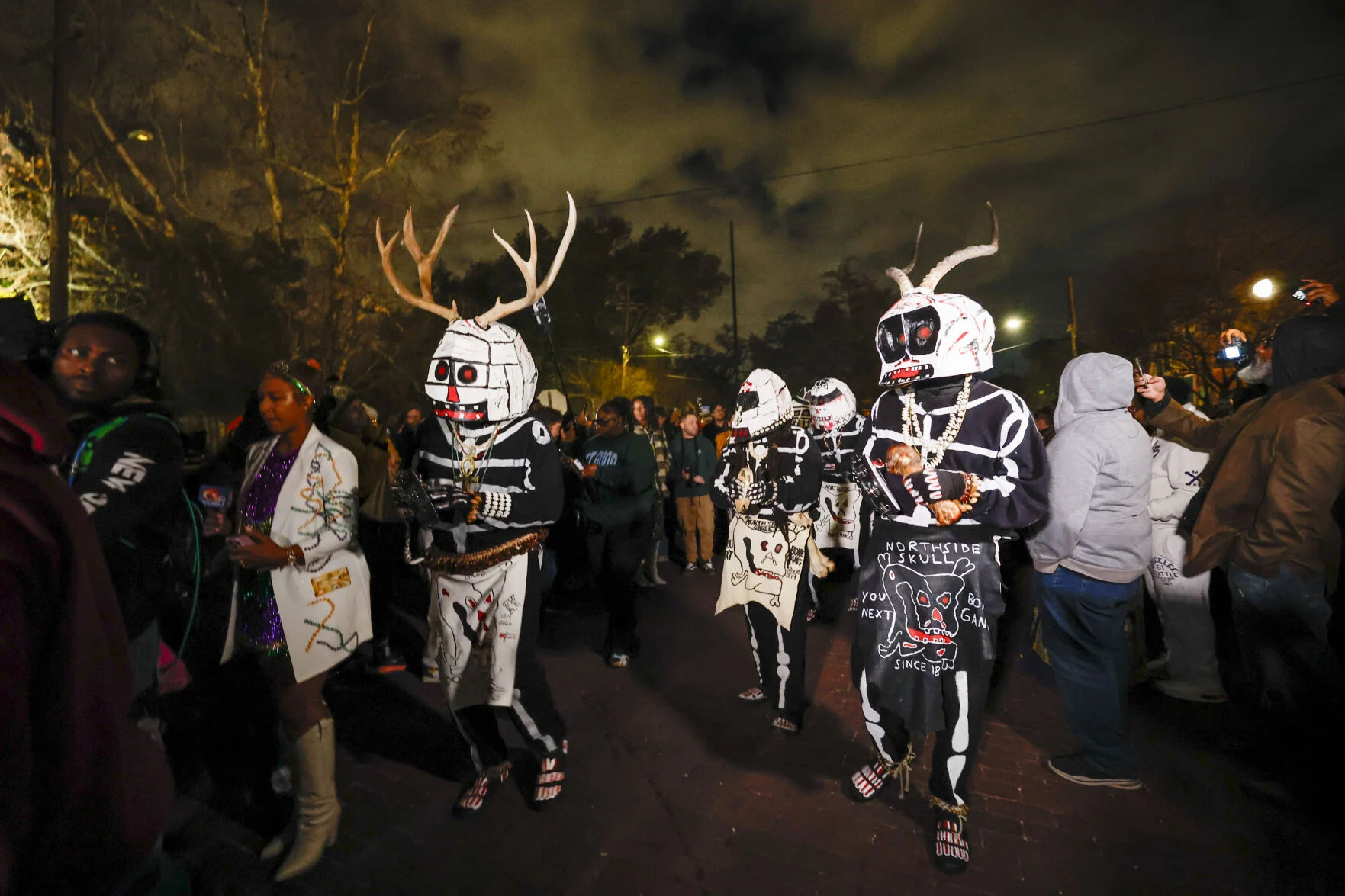
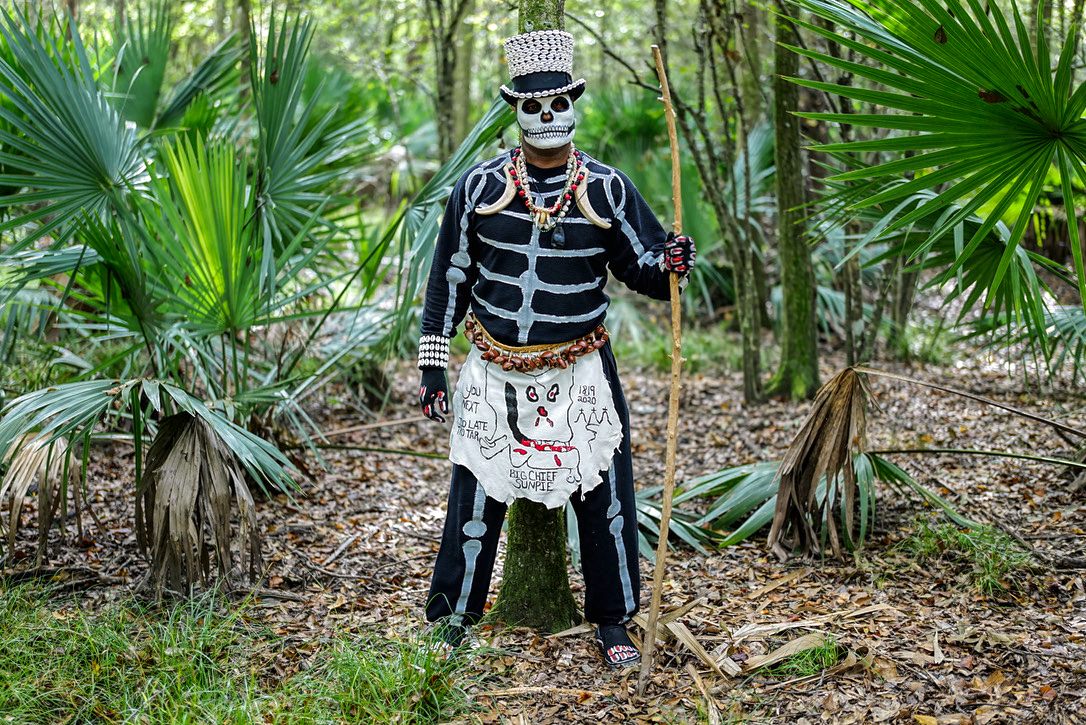
Disaster is its own rhythm for those burdened with surviving it. Life continues to exist, dually, as history and myth. In New Orleans, the Black Spiritual Church found distinction from others elsewhere, as in the makeeds of Basra, through its emphasis on spiritual possession. Part of layering and understanding the divine and aesthetic relationships between these two places came through interviews. In New Orleans, I spoke with Dj, Káyòdé Fùnké and musician Bruce “Sunpie” Barnes. Both who spoke frankly to the role of possession in their own work. Barnes, chief of the Northside Skull and Bone Gang, spoke to me about the feeling on Mardi Gras morning when his skeleton crew hits the predawn streets. Skeleton imagery is prevalent in transatlantic diasporas of Black peoples across the Caribbean. In New Orleans, the tradition finds it start in the early 1800s. “The masking thing is what we call entertaining spirit. I give it up to the spirit world. I don't know if it's gonna last an hour. Could be twenty three hours. I just let it go, but you don't try and control it.”
In the makeed, the ritual tools of olive oil, eggs, rosewater, bitter and sweet coffees, are gathered in glass jars and carried into the space on the heads of children. During the Al-Nuban ritual, the master of ceremonies, the chawush, is often a woman, and it is she who marks the ceremonies’ beginning and end. The person for whose healing the ceremony is being held is closely monitored by the chawush. The Zaar, spirit-like entities one inherits from their ancestors, will enter the body, the spirit, possess and clean it. The rosewater, symbolic of the Prophet Muhammad’s (PBUH) sweat, is used to revive the patient as possession comes to a close and is distributed to attendees to consume and bathe with.
These rituals, public and private, create what Beliso de Jesus calls in his “Santeria: Copresence and the Making of African Diaspora Bodies,” “an embodied epistemology of copresence.” This notion was echoed by Fùnké when describing what she conjures on her dancefloor. Fùnké reminds me that her mother’s maiden name is Bolden and of her love for John the Baptist. I put The Last Temptation of Christ, the novel by Nikos Kazantzakis, on my list to revisit. Fùnké describes her favorite scenes between Jesus and John the Baptist from the film adaptation. Jesus reaches John’s encampment, witnessing sometimes nude men and women shivering from the spiritual ectacsy of his words. They writhe in their rhythm. Fùnké tells me that through her sets, she aims to provide the space for that radical leap, for trust in the spiritual safety that the trance state can provide.
Supplication
Blackhawk is a watchman!
This past June built an altar, or more accurately a shrine, on St. Claude Ave for Set De Flo’s Juneteenth weekend celebration. A party series started by Kilobaud, Set de Flo is centered around dance music and the Black origins of house, techno and club music encouraging experimentation and self definition. Formerly performing under the moniker, Lil Jodeci, other notable series by Kilobaud include the Jodeci Juice Joint in the chapel room of Hotel Saint Vincent (formerly the St Vincent DePaul orphanage), which combines the electronic elements of keyboard and controllers with jazz musician Juice’s live trumpet playing. The Juneteenth celebration of Set De Flo was hosted along with The Lowdown, a collective based in Memphis, Tennessee. Fùnké was also on the bill, connecting both points on the Mississippi River, as a Memphis native and New Orleans daughter, putting that conjuring, she described in her interview, into practice.
I sewed long braids into my altar doll, Indian Green’s head, placing her at the center. Sun Ra, Assata Shakur, along with Luther Vandross, Ray Charles, and Soulja Slim took their places and provided the spiritual order for the night. I was happy to plan and also take on the spiritual improvisation of creating a sacred space on the street. I made a silent dedication also to the memory of Keith Sam, famous in New Orleans for his umbrella hat and streetside evangelism.
The smell of whiskey and vetiver in my nose, I watched the sun both go down and rise on the avenue named for Paul Treme’s patron saint, Saint Claudius of Besançon, patron of watchmakers, woodturners, woodcarvers, toy makers, goldsmiths, and blacksmiths.
Where human capacity falls short, improvisation can take over in the form of spirit. When hearts are open, it presents itself as a guide for the aspects of life logic cannot sort out. In the summertime sometimes the marshes in Louisiana burn. Every summer, it gets hotter and dryer. New disasters are always looming, but we make sure to rebuke, together, any and all of them on the dance floor. I imagine we are who the kings depicted in Dwellers in the Marshes found when they entered that smear of black. On this night to close this particular ceremony, Fùnké ends with “Father I Stretch My Hands" by Pastor T. L. Barrett and The Youth for Christ Choir. We lose ourselves and our human egos. Surrounded, we are all fire, rain and ecstatic light.
Sound is spirit. The spirit is sound. Memory reveals and evades its nature, keeps its mysteries. The word. People are its keepers —the water is vessel and vehicle. Melodic, cacophonic, hypnotic, wailing, a thumping, throbbing pulse, refusing death, submission or capitulation. It has spoken through many silences of history. Borne our contradictions, wrote our rules and broke them again— pieces of our hearts flung across the earth and outer galaxies to plant and replicate.
Sugar and Dates Part Two,
September 2001
Black Hawk is a watchman!
Expect no less than a full-scale upheaval, Father continues. Freedoms you have never known a life without will be challenged. Remember, generations of your family were born and died never seeing these shores or chains or the ships that would bring disease in. You come from a people who entered this politics already post-modern. You have already survived the apocalypse.
The city that you know, its days are numbered. They have built a house of cards, a castle of sand. It cannot stand. The bottom will fall out of theirs and they will be arriving shortly to kick you out of yours. A lot will be required of you. There will be no one else left to pick up the pieces.
You have not lived as long as me. I know you may not understand this lecture today. But if you remember anything. Ask yourself, what will you do with calamity? You must decide. This is the pattern. This is history.
RELATED ARTICLES